

My Narcissistic Mother And I Had One Thing In Common - We Both Hated My Body
From injections by a Beverly Hills weight-loss doctor to prescription diet pills in high school to my own attempt to end it all with an overdose, my mom and I agreed: I didn't look good.
Hello, lovelies, all of you!
I am going to skip the usual updates. (Besides these: Some guy at exercise class keeps high-fiving me and next time I want to yell, “I’m a sex abuse survivor (true)! Don’t fuck with me!” AND I am still giving away these gorgeous new Sassy shirts to subscribers who upgrade to Annual or Founding Subscriptions.)
Now straight to the thing you’ve been bugging for: The follow-up to Leslie’s saga about her narcissistic borderline-anorexic mother. (Is it a little odd for me to describe her mom in those terms? Like Leslie can say it but I can’t?)
If you haven't yet read Leslie's first installment of this series, you may want to start there.
And if you want my highest recommendation of pretty much anything I have published in all my decades publishing (hi, every Sassy and Jane and xoJane writer ever!), check out Leslie’s first riveting series for AJPT about her husband’s affair and the unusual way she dealt with it, which she wrote initially under a pseudonym for understandable reasons.
And then the other thing you might want to do is comment below on whether you can relate to having this type of Mom Leslie describes or not. It's been shocking to me how many of you in your specific demographic (Original Sassy Reader Age) had moms that sound so much like this one. So Leslie and I would love to hear more of those stories too if you want to share them. And we love you either way.
Sassy Forever,
Jane
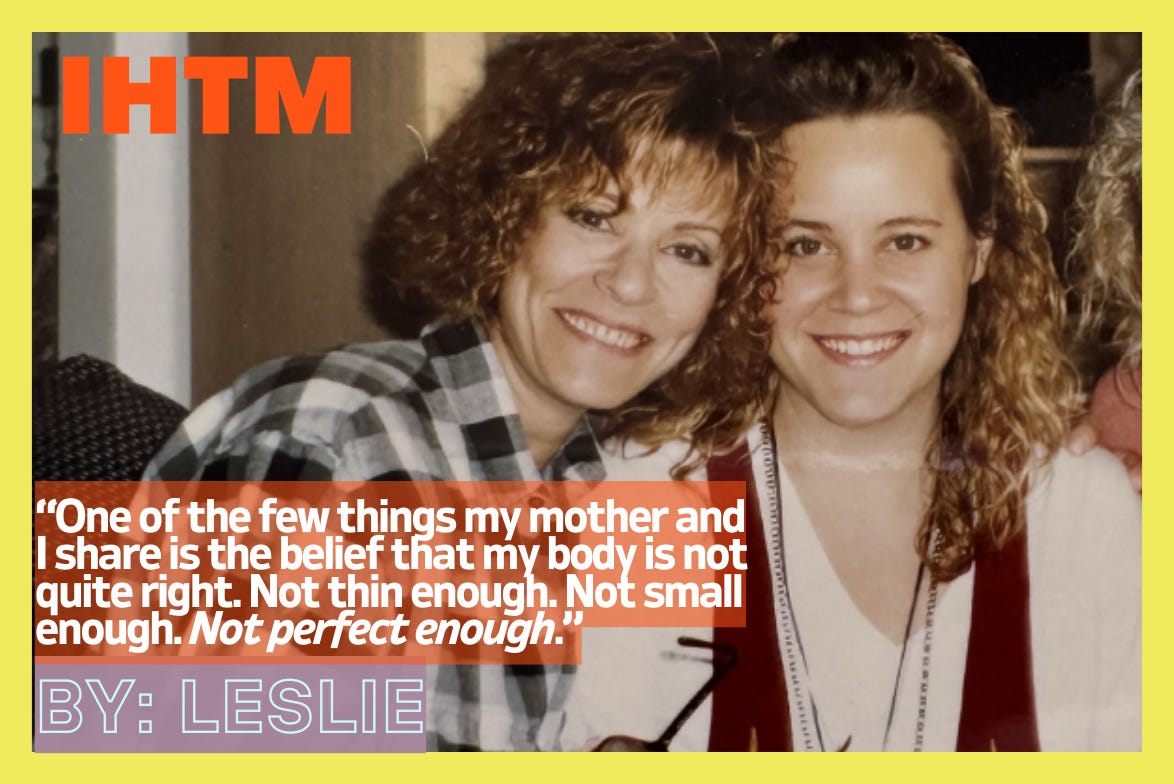
By Leslie
We lock the hurricane indoors
Looking for shelter, we deny and ignore
Afraid that our words bring clouds, we talk in code
The thunder of cruel perfection covers love
And we’re cold
Oh, the private storm
And our souls are worn from the tears
Oh, the private storm
And it rages on through the years
No warning, the ground pulls out from underneath
We tiptoe through air until we see the blood on their teeth
Time doesn’t heal
Scars turn into wounds
As we walk lightly, silent screams in the storm
-Private Storm by Sam Phillips
Unexpectedly seeing my mother’s name on my phone in the form of a text message after having experienced nine blissful months of peace following my decision to go no-contact, a decision I did not come to easily, set my nervous system back in both surprising and familiar ways. What could she possibly want? I honestly didn’t care what she wanted, but ignoring her text would only cause me more anxiety than I was willing to endure, so I braced myself and reluctantly swiped up on my phone screen to see this:
“My door is open, should you ever choose to walk through it.”
This is insane.
I know instantly that this text is the result of hours, and possibly days, of rumination. Her brain has been very busy.
I almost laugh out loud at the absurdity of her phrasing; rereading the words, all I can hear is Dame Maggie Smith channeling Violet Crawley in Downton Abbey:
“My doooor is ooopen, should you ever chooose to walk throoough it.”
Formal and grandiose.
I immediately want to know how long it took her to come up with this banger, and I would also like to see the several other candidates she considered before deciding that this missive was the winner.
In the several months leading up to my decision to go no-contact, I endured a barrage of vicious, hateful emails and texts from my mother accusing me of all sorts of made-up things that never happened, telling me what a horrible person I was, and comparing me to everyone that she hates most in our family, including my brother, my (birth) father, and his mother - my fabulous, magical grandmother - whom I loved dearly.
The frequency and level of hate in those emails escalated over time to the degree that I created a file to preserve them. I didn’t have an agenda or plan for them, but it felt important at the time, if only to serve as reminders of what I was dealing with in case the empath in me began to feel guilty about cutting her off.
“My mother was having my healthy teenage body injected with hormones while enthusiastically endorsing my use of amphetamines.”
Narcissists prey on empaths because they know we crave harmony and will go to great lengths to keep the peace, including tolerating bad behavior and boundary violations. It’s all a test. Once she realized I wasn’t going to engage with her or respond, she stopped, but not before vomiting her hatred all over me.
I would have loved to share some of those messages with you here, but in October of 2023, my phone was stolen, and I lost access to my Gmail account, which contained that file. I do not remember the specifics of those messages, but they were unhinged and delusional, oftentimes just letting me know what a terrible person I am and always have been.
Narcissistic Abuse Hack #2: Every accusation is a confession. The narcissist needs to create a version of you that fits their version of events. You will be accused of having said and done things you never said or did. It is incredibly disorienting, and it will make you question your sanity, which is the whole point. It is a projection, a psychological defense mechanism where the narcissist attributes their own thoughts, feelings, and worst behaviors to another person. They are not objective observations; instead, they serve as involuntary confessions and a way to control the narrative. By pinning their worst flaws on you, they are able to avoid feelings of shame and maintain a false sense of superiority.
For my mother to now be making an effort to connect on the heels of that behavior was extremely suspicious.
I feel no obligation to answer her right away, which is a sign of significant progress in my recovery; I have always been scared of her and never knew I was allowed to take a pause, to sit with a feeling, and/or consider an idea before responding.
I’m not gonna lie; it was immensely satisfying, after decades of fawning and capitulation, to have the ball in my court, play offense, and make her wait for a reply. I wanted to set her nervous system ablaze for a change, to show her what it feels like when you are not the one with your hands on the steering wheel, when you make a bid for connection, not knowing whether you will be met with kindness, hostility, or worse yet, indifference.
I needed to reset my nervous system. As I lay on the sofa in my studio, I thought of the years of abuse and pain that brought me here, and how hard I had worked to silence the voices in my head that told me I wasn’t enough, and would never be.
Memories danced across my mind in no particular order, like a Greatest Hits of my most painful experiences:
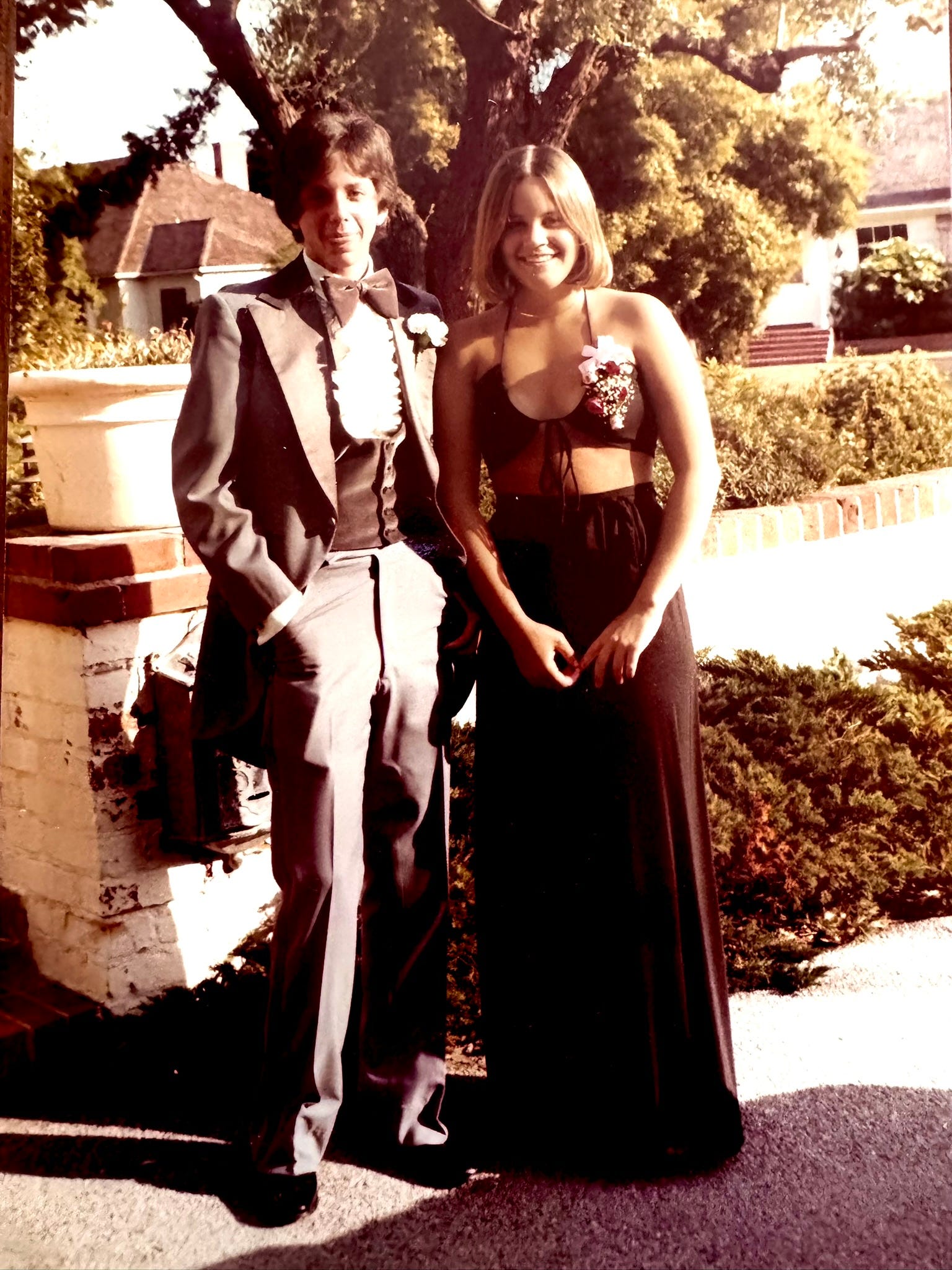
It is Saturday, May 16, 1976, the night of my senior prom. I should be excited to go, but I am not.
I am standing in front of a wall of full-length mirrors that open to two large, side-by-side walk-in closets in my parents’ bedroom in our home in Westwood, four blocks from UCLA. My mother’s closet, behind one side of the wall, is a magical dreamland of stylish perfection. I could live in her closet.
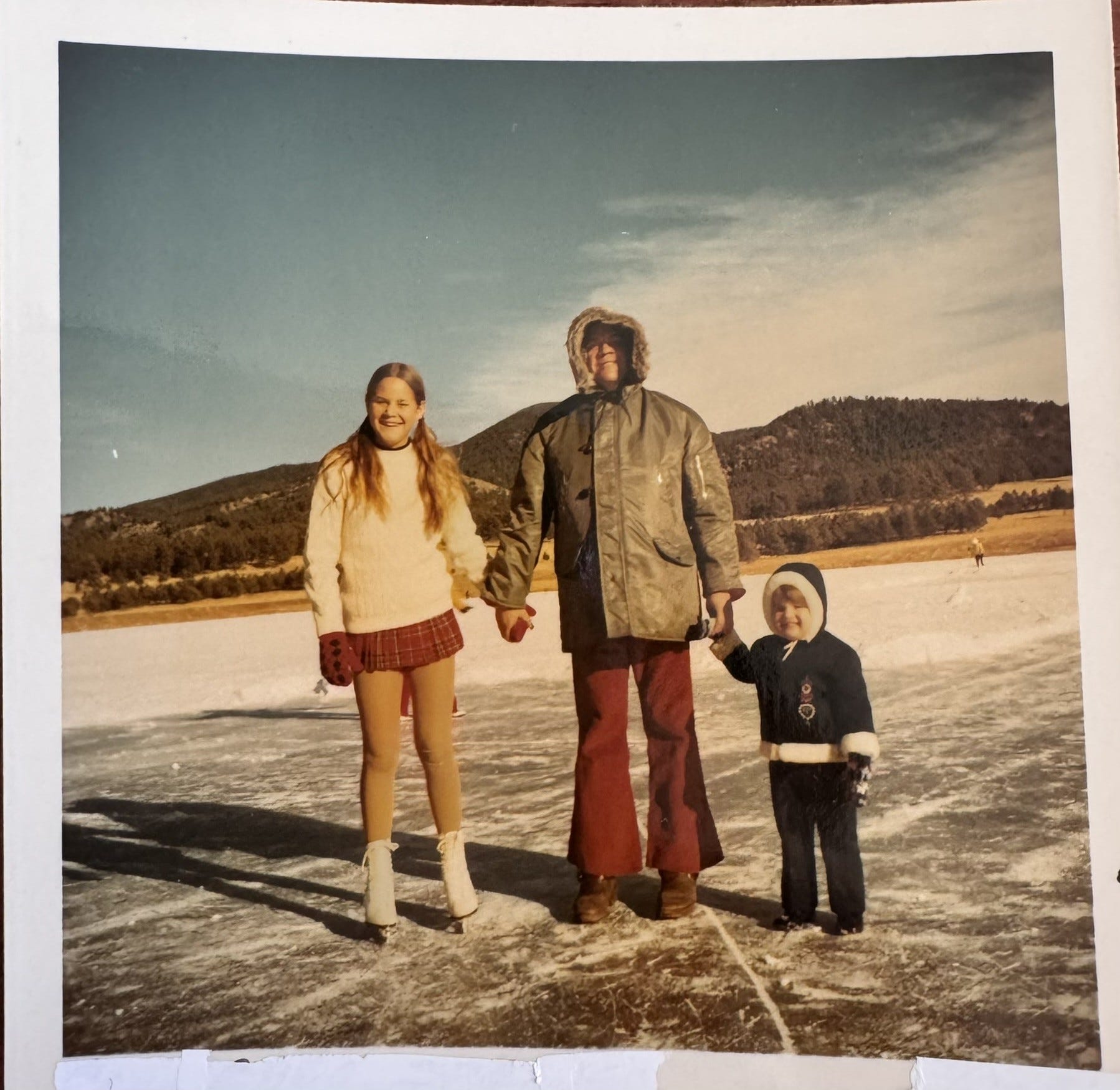
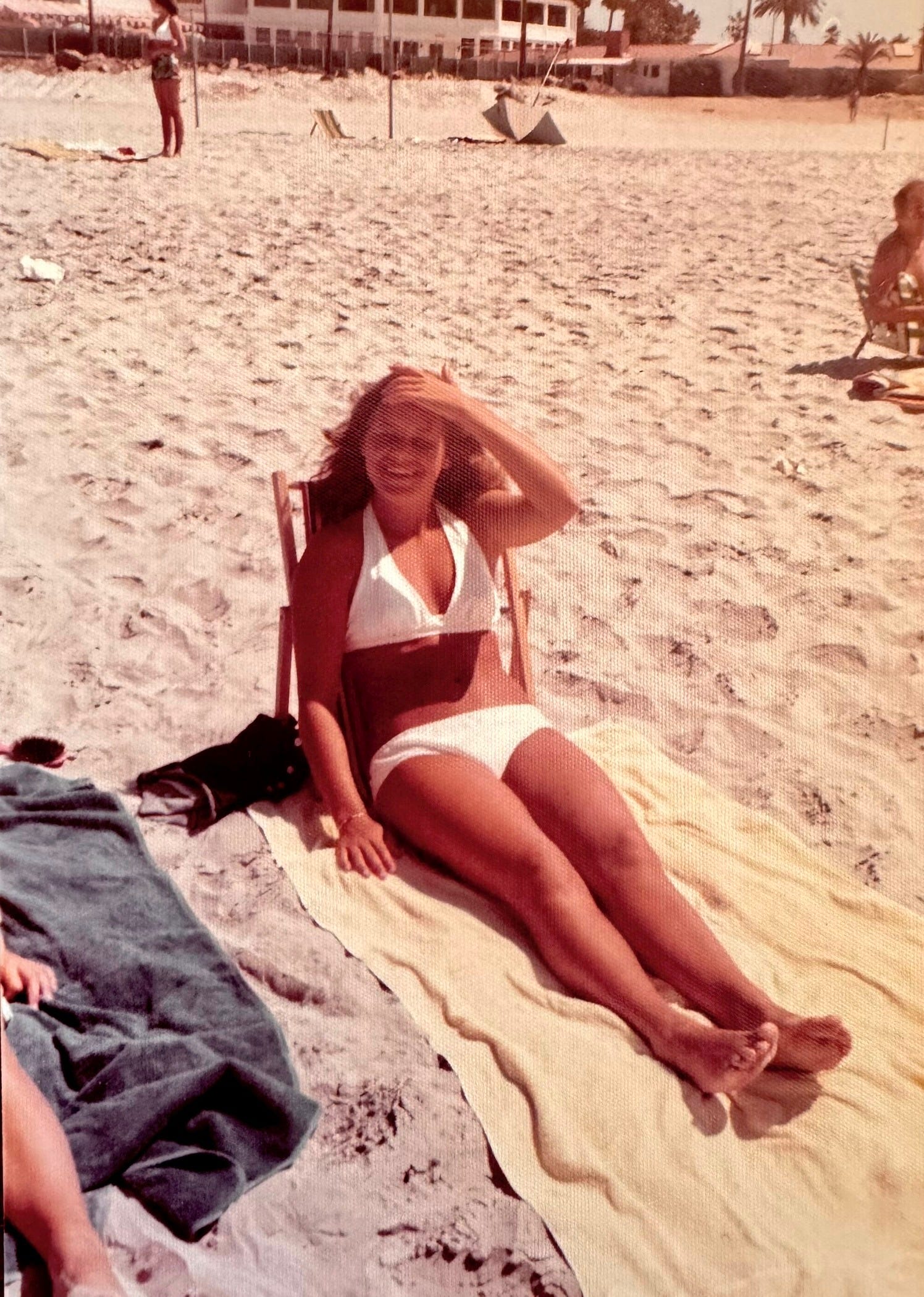
One of the very few things my mother and I share is a love of clothing. Another thing we share is the belief that my body, the body that propels me effortlessly and gracefully through the turquoise water of a swimming pool, the body that twists and bends and flies through the air as a gymnast, the body that glides and spins on two thin blades strapped to my feet on the ice of a skating rink, is not quite right. Not quite thin enough. Not quite small enough. Not perfect enough. I am not enough.


It would take several decades for me to realize that for my entire childhood, and most of my adult life, I had been fed erroneous and objectively false information about who I was, how I looked, and what I deserved.
Standing in front of the wall of mirrors, I am filled with anxiety. My seafoam-green Qiana halter dress from Joseph Magnin grazes my slender, eighteen-year-old athlete’s body; a body that is strong and graceful, healthy and agile, but all I see is imperfection staring back at me because that is what my eyes have been trained to find.
I have body dysmorphia.
My mother is standing just behind me and slightly to the right. We take stock — together but separately — of my reflection.
Suddenly, the dress I loved three weeks ago looks stupid, and the color is all wrong. I cannot read the expression on my mother’s face; not disapproving, exactly, just unreadable. She is not saying anything. I want her - no - I need her to tell me I look beautiful, because that’s what moms are supposed to do, especially on the night of your senior prom, but silence fills the room.
“After a particularly horrible fight with my mom, I wanted to no longer feel like the biggest disappointment on the planet. My solution was to swallow a half-full bottle of Tylenol.”
My date, Patrick, will be here any minute. Patrick is the older brother of my best friend, Stacy. Patrick is very handsome and a sophomore at UCLA. Patrick drives an old Porsche and has a short, neatly trimmed beard. Patrick may as well be a 30-year-old man as far as I’m concerned; he is not in our class, not one of us, too mature to be attending a high school prom for someone who is not my boyfriend. I do not really know him, nor do I believe for a minute that he is looking forward to this evening. I am a pity date.
I know that the only reason Patrick invited me to my prom is that, with two weeks to go, no one had asked me yet, and Stacy, being the incredible friend she was, pressed her brother into service. He is being a good big brother, which makes the whole experience even more humiliating, but missing my prom altogether would be worse.
The only boy I cared about, the tall, blonde, aloof, impossibly handsome, hot-and-cold basketball boy, asked another girl who isn’t me to prom. It should have been the four of us: Stacy, her boyfriend, Alex, me, and Basketball Boy, Alex’s best friend and my on-again, off-again, never-really-boyfriend-and-girlfriend situationship, a term not yet birthed into existence in 1976. It should have been magical, like a storyline straight out of a YA novel, my entire existence validated, the senior year ending I longed for, a question mark turned into an emphatic period, but it was none of those things.
Standing in my parents’ room now, my stomach in knots, I know intuitively that I cannot directly ask my mother for the reassurance and kind words I desperately need in this moment, so I throw a line out there, hoping she will take the bait.
“I have shoulders like a guy”, I say, not truly convinced that this is true, but hoping that I am so off the mark that she has no choice but to tell me how wrong I am.
“Yes, you do,” she says.
I swallow hard and will myself not to react. I am mortified, but I will not give her the satisfaction of seeing the gut-punch land. I stand, silent, ashamed of my entire existence.
The doorbell rings. My pretend prom date has arrived. I take a deep breath and walk slowly down the stairs into the longest night of my life.
It is not an exaggeration to say that I have never felt less understood or seen by anyone in my life than by my own mother. Knowing what I know now about NPD and BPD, I never stood a chance, but I spent most of my life hoping against hope that she would someday see me for who I really was, and not the scapegoat she had made me into. It was exhausting, confusing, and futile.
A few weeks after my senior prom, after a particularly horrible fight with my mom, I thought, “What’s the point of any of this?”
We never had meaningful discussions. She wasn’t interested in my feelings. I felt utterly hopeless and deflated. I wanted to disappear, to be free, to no longer feel like the biggest disappointment on the planet.
My solution at that moment was to swallow the contents of a half-full bottle of Tylenol. I don’t think I truly wanted to off myself, I just wanted to stop feeling. I then panicked and called the suicide hotline, but hung up on the older woman who answered my call when she tried to tell me in a patronizing tone that she was sure my mother really did love me.
Out of ideas, I drove myself to my after-school job at the department store. I didn’t know what else to do. I certainly couldn’t tell my mom what I had done, but not long after clocking in for my shift, I began to feel nauseous, light-headed, and dizzy, and I was terrified. Can you die from taking too much Tylenol? This was 1976. There were no cell phones. No internet. I couldn’t Google my way out of this panic. I had to call my mother to tell her what I had done so she could tell me what I should do.
“Well then, I guess you’d better…
TO KEEP READING AND FIND OUT WHAT LESLIE’S MOM SAID, AS WELL AS GET ACCESS TO EVERY OTHER EXCLUSIVE ARTICLE ON THIS WHOLE SITE, SUBSCRIBE HERE. YOUR PAYMENTS ARE HOW LESLIE AND OTHER WRITERS GET PAID, SO WE ALL THANK YOU!
