

IT HAPPENED TO ME: My Mom's A Narcissist With Borderline Personality Disorder Who's Also Anorexia-Adjacent. You?
PLUS: Free Shirts! Free signed issues of SASSY! Update on your great new job! A celebrity! And more!
Hello children, because we all are,
So so many comments and submissions from you all lately – as well as so many of the recent memoirs I read before I stopped reading them while writing my own* - have the same theme. Essentially: “My mom was a narcissist or had some other form of mental illness, generally undiagnosed, that caused her to treat me meanly and/or neglectfully growing up and she still does it.” In messages, notes and stories and in person, you’ve told me about ways that your moms generally dismissed and sometimes competed with you. You’ve said that they didn’t respect your boundaries and that you’ve never felt the type of unconditional mother’s love that you have heard about or seen elsewhere. Eating disorders among these moms seem rampant.
I don't often discern by gender and often won’t categorize by age, but the submissions on this topic have been primarily from women who are in what I think of as that “original Sassy reader age range,” meaning they are now roughly in their 40s and 50s.
I have been devising theories about why it is that mothers of this generation would have these traits in common and wanting to hear about what happened exactly and how it’s impacted you. So as she explains in the intro to her story below, I texted Leslie. (Backstory: Leslie wrote the brilliant and unforgettable series here about discovering her husband's affair and the surprising way she handled it. I mean, I love everything that I publish on AJPT for one reason or another - sometimes love-hate, as in the case of some Unpopular Opinions especially - but if you're going to read one thing on this whole site - though why you would deprive yourself like that is beyond me and live a little! - her affair series is the one not to miss, I swear to you and you'll thank me I'm sure, so check it out right now and come back if you want, because the rest of this isn't going anywhere. If it gives you any indication how revealing and vulnerably exposing the story is, Leslie started out using a pseudonym, but when you all lovingly supported rather than judged in the comments, she revealed her real identity. I love you all when that happens.) I had seen glimpses of this narcissist mom theme in Leslie’s writing and wanted to know if Leslie would tell the story of her own mom experience as part of this apparent (to me) cultural phenomenon. She said yes obviously, because here we are.
What I hope this series (starting today) will do is twofold (and I can’t believe I used the word twofold either): Show off Leslie’s clear and beautiful-always writing and her riveting-always personal stories - this time about her mom. I also hope that it provides a place (that would be the comments below) for you all to say if you've had related experiences. I'm dying to know how widespread this is and dying to know how we can help each other out through it. I did not have this experience with my own mom – not that any mother-daughter relationship isn't without some turmoil – but I sure am hearing it a lot from all of you. I'm wondering if it's because your moms were part of the first generation who were taught to take care of themselves and that being selfish and putting their needs first, over their families even, was not only acceptable but admirable. I think they were the first to widely see getting divorced as an achievement and a positive step toward growth rather than shameful. (I just heard on NPR today that it was with this generation that the majority of divorces began being instigated by the wives - and that women who are now in their 40s and 50s initiate 70% of them.)
Anyway, I'm really curious about all of your relationships with your mothers and let's see how many of you can relate to at least some part of what Leslie so eloquently describes starting here below. I will see you in those comments that I love so much. Thank you for yours in advance!
XO always, Jane
PS I'm going to start writing back next week to all the people who are still in the running for the first AJPT reader-sourced writing and editing position. I apologize for how long it's taking, but I am reading carefully every email from the thousands of you who wrote in and it's so important to me to be respectful of and match the efforts you each put into this. So some of you should start to hear back from me by email soon and if you don't, don't worry because I'm going to do another sweep here after to make sure nothing got lost in the shuffle and my goal is to make sure every single person of the thousands of you who wrote gets some closure on their application one way or the other. If I had been a planner, I would've set up a separate email for this but I don't tend to think that way or take that kind of time when I’m excited. Which is always. On the positive side of that lack of efficiency, I have read many of your applications five times or more and in many cases, I see something great in the third read that I didn't see in the first, so thanks universe for working it out for all of us regardless always.
PPS For those free shirts and free issues of Sassy I mentioned under the subject line in your email and above, look here for the details and get yours. The best way to do that is to upgrade your subscription and get the shirt for free because that's a win win win win all around and helps pay our writers, one of which can be you if you want to send a submission to Jane@AnotherJanePrattThing.com and yeah wow that was a long intro. Sorry, Charlie!
*I realized this past weekend (when I got to spend quality time with so damn many people I love and haven’t seen in ages - including a highlight of making great new friends with the amazing Brandi Carlile - ok that’s my name drop quota fulfilled for this post - check!) that I will be getting the question “How is your memoir coming along?” from every kind and well-mannered and sweet non-egomaniacal person I see until the book is published. It feels similar to my lifelong-anxiety-poking “Have you packed yet?” (when I always want to scream, “Of course not!!! Do you know me?!??”). So I hope to come up with a nice answer I can say to everyone that will be respectful and appreciative and not tell them more than they care to hear - something quick that closes that potential conversation right up. Tell me what you would use in these situations where you’re asked something you don’t want to answer, in order to avoid having a panic attack every time please and thank you!
NOTE ON THE BUTTON ABOVE: We priced these brand new shirts and then Printify raised their rates so that we are losing money on them now but that’s not your fault so grab yours before we have to raise the dumb prices. I love you and you have great taste!!!!
By Leslie
Last year, while writing about the spectacular implosion of my marriage for Jane’s IHTM column, I wrote briefly about my mother and her abusive behavior on the heels of a phone call in which I had revealed to her my (ex)husband’s affair, which was ongoing at the time.
Several women responded to that piece of my story. Jane then encouraged me to write a separate piece just about my mother, and I agreed, but it’s taken me a minute to get started because I didn’t know where to begin. My marriage story had a clear beginning, middle, and end. This story involves a lifetime of experiences that began in childhood and impacted almost every area of my life.
My story, while certainly not as harrowing as many (I was raised with a certain amount of privilege in an affluent area of Los Angeles), is the story of an empath born to a narcissist with Borderline Personality Disorder who was also anorexia-adjacent.
It is the story of the never-ending struggle to find safety in a landscape filled with emotional landmines and constantly shifting goalposts, and of the many adaptations children must make when they cannot fight or flee the adults responsible for their literal survival. The empath/narcissist relational dynamic is one of the most toxic there is. The head-spinning behavior I was subjected to was sometimes subtle, at other times shockingly overt.
As I write this, my mother is 92 years old. We are currently on speaking terms, but that has not always been the case, as you will see.
My hope is that by telling my story, other women who have had, or are having, similar experiences will feel less alone. I wandered the metaphorical desert for much of my life with more questions than answers, and I carried a lot of shame that was never mine to bear.
DISCLAIMER: Any insights I offer into the mind of someone with NPD and/or BPD come from my own experience, the feedback I received from therapists, and my own research. I am not in any way equipped to give advice or to suggest that any of the actions I took are right for anyone else. I am not an expert, a licensed therapist, or a mental health professional. I can point you towards resources that may be helpful, and I will share a couple of those here, but everyone must negotiate their own journey with the narcissist in a way that makes sense for them, hopefully with the help of a professional specializing in narcissistic abuse.
*************************************************************************************************************
THE STORY
It is Wednesday, March 13, 2024. I am standing on a ladder in my art studio at the Beacon Arts Building in Inglewood, CA, a suburb of Los Angeles. My 400 sq. ft. studio is on the fourth floor of what used to be a storage facility for the Bekins Moving and Storage Company, until some guy who owns several IHOPs all over L.A. bought the building and turned it into creative spaces.
Because this was formerly a storage facility, my studio consists of four concrete walls and no natural light, except for a small opening high on one wall where a square has been cut out of the concrete to accommodate a fan, which provides the only ventilation.
I am currently in the process of dismantling my favorite part of the studio, an entire wall covered in magazine pages, photographs, and various ephemera; a vision board of sorts, the outward representation of my inner world and all the things that move me: nature, fashion, art, words, etc. - me on a wall, essentially - when my phone alerts me to a text.


I am in the throes of packing up my studio, and I am sad about that; post-pandemic, my once steady income stream is not what it used to be, and although I am selling my art, it is not enough to sustain a studio and an apartment in a city that has become increasingly expensive.
Cardboard boxes in varying stages of packed-up-ness, (a term I just invented!) sit open on the floor below me, awaiting paint mediums, brushes, squeeze bottles of Golden acrylic paint, and all manner of art supplies - pieces of my heart relegated to the inside of a box, and then, ironically, a storage facility, until who knows when.
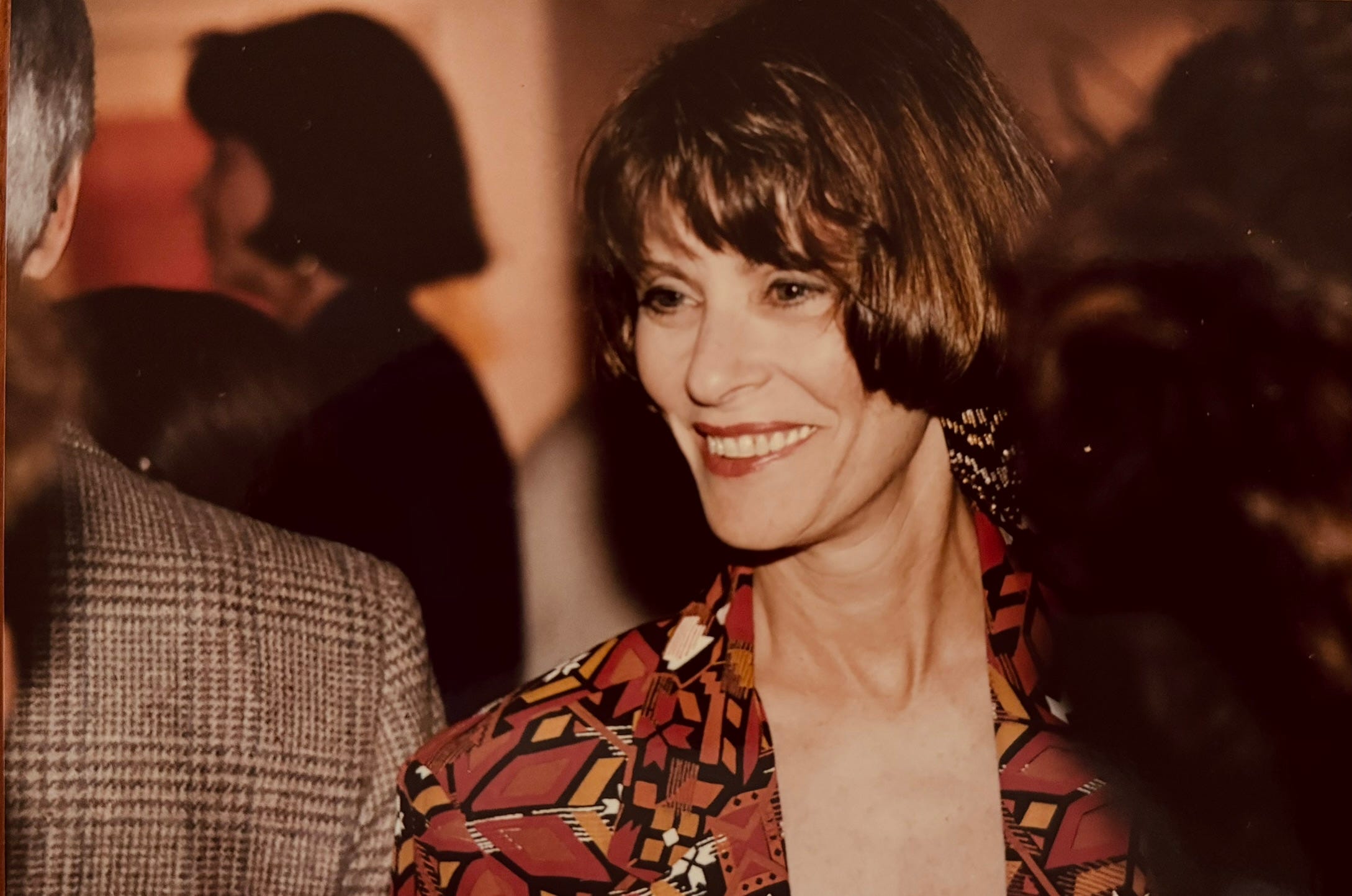
It is a miracle that I am making art at all, because my mother has always been the artist in the family, and although I have always been creative, I never once considered becoming a painter until I was well into my 50s. Making art is my mother’s domain - the place she shines - and to shine as brightly, or, God forbid, brighter than her, comes with potential consequences.
It is an unspoken rule; the message is subliminal, the agreement tacit: to be highly visible, to claim your gifts, to be confident, upsets the ecosystem.
It’s a real mindfuck, because at first, you may receive glowing reviews and compliments about your gifts and talents, especially if they can be perceived as a direct reflection of the narcissist and their gifts; if the narcissist can somehow take credit for your talent and your wins, you may be safe, but even then, the tables are bound to turn at some point; at some point, you will have stepped out of bounds, become too much, too big for your britches, too happy, too (fill in the blank). The storm clouds will gather and swirl above your head, and the narcissist will gaslight you into believing that you alone are responsible for this sudden change in the weather.
I step down from the ladder, retrieve the phone from my work table, and look at the name on the screen.
What.
The actual.
FUCK.
“My father was still alive, but she was already making big plans.”
Following a CPTSD diagnosis in 2019, several years of therapy (the talking kind, the somatic kind, and the EMDR kind), and a year of non-stop emotional abuse in 2023, I finally found the courage to go no-contact with my mother. Even after all that therapy, just seeing her name on my phone now sets my nervous system back in a way that surprises me, and is simultaneously all too familiar.
The last nine months have been the most peaceful of my entire life. Whatever misplaced guilt I initially felt about going no-contact with a parent is long gone. My mother is 90 years old, and I am pretty much all she has, having cut most people out of her life, but I can finally, finally look back with clear eyes and the full knowledge that, regardless of her own childhood trauma, there is no excuse for the emotional neglect and abuse I was subjected to.
Narcissistic Abuse Hack #1: The narcissist is looking for a fight. The fight is the point. The abuse is the point. The cruelty is the point. They need your participation. You are their supply. You are both their dealer and their fix. If you want to drive a narcissist crazy, stop engaging; do not respond to their calls, texts, or emails. They are not interested in logic or reason; logic and reason are kryptonite to the narcissist. It took me way too long to figure this out.
My mother’s weapons of choice are the pen and the keyboard. She is incapable of having difficult conversations, so uncomfortable in her own skin that she sends scathing letters, emails, and texts that could level a tall building. She is not interested in repair; she is interested in being right and having the last word. Over the years, she has, proudly, on occasion, read me break-up letters she has sent soon-to-be-ex friends, delighting in her own cleverness and her “I showed them!” level of finger-pointing, wearing her smug self-satisfaction as a badge of honor.
Despite being the common denominator in all her relationship challenges, she is never part of the problem; only the victim.
The path to going no-contact with my mother was a long and winding road that began with the death of my stepfather (who I will be referring to simply as “my dad”, or “my father” from here on out) in May of 2014. By the time he passed, he and my mother had been divorced for years, but they had remained mostly friendly, except for those periods when he became the target of her misplaced rage and accusations. I will delve more deeply into their dynamic later, but there was a lot of triangulation, one of my mother’s specialties, wherein I became her confidant and the sounding board for all her righteous indignation and grievances about my father. It was highly inappropriate, and I hated her for it. After he died, she set her sights on me, and the abuse, gaslighting, and stonewalling escalated exponentially. More about that later!
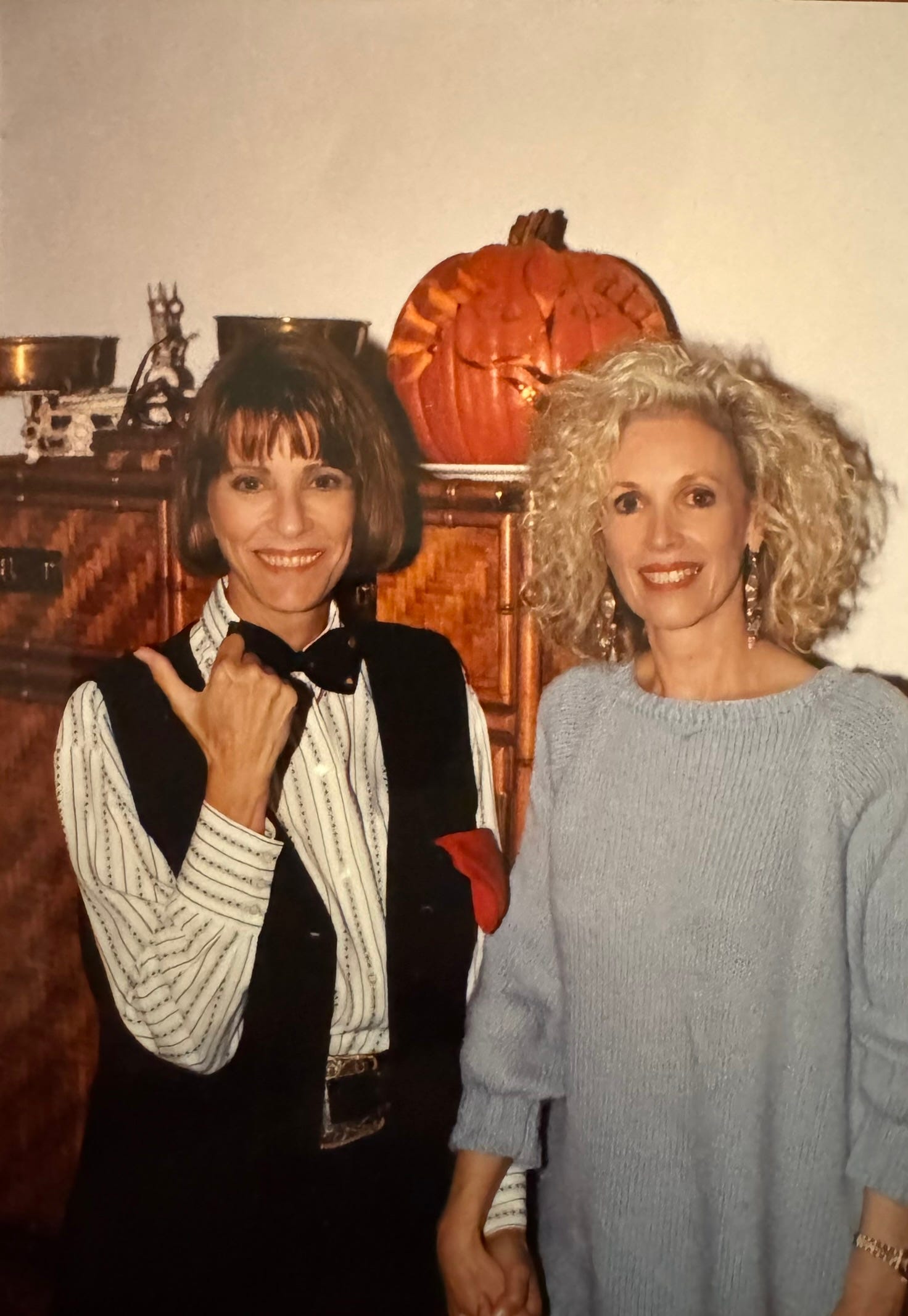
In January of 2014, my dad entered the hospital and remained there for two months after repeated episodes in which his blood pressure would drop suddenly, causing him to pass out; paramedics would be called, but by the time they arrived, he would have stabilized, and he routinely refused to let them take him to the hospital. His private physician could not figure out what was wrong with him or how to stabilize his blood pressure long-term. These episodes began escalating by the end of 2013, and following several more falls within a 3-4 week period in January of 2014, I insisted he surrender to the paramedics. We needed answers.
For the first week or so of those two months, my mother accompanied me to the hospital daily, but she soon became bored with (and annoyed by) my dad’s condition, so she stopped going. She was absolutely incensed that my dad had the nerve to ask her to stop by his house and pick up his newspaper every day (it was on her way), and she quickly decided she was done; to be fair, they weren’t married anymore, so I’m not sure she owed that to him, but she showed no empathy, no compassion, no concern. She stopped asking me about him altogether.
My mother is great at making grand, sweeping gestures and swooping in like Florence Nightingale at the first sign of a crisis, but the minute it becomes clear that ongoing support will be needed, she loses interest and inevitably turns into Nurse Ratched.
My dad returned home after two months to round-the-clock caregivers, but he never quite returned to being his former, vibrant, funny self. In May of 2014, he again ended up in the hospital, this time in the ICU. I had stopped by to see him that morning and knew immediately something wasn’t right. He was seated in his wheelchair, but could barely lift his head to speak to me. Even with what I knew to be his new “normal”, this was deeply concerning, and when his vital signs remained questionable by the afternoon, the paramedics were called, and he went back to the hospital.
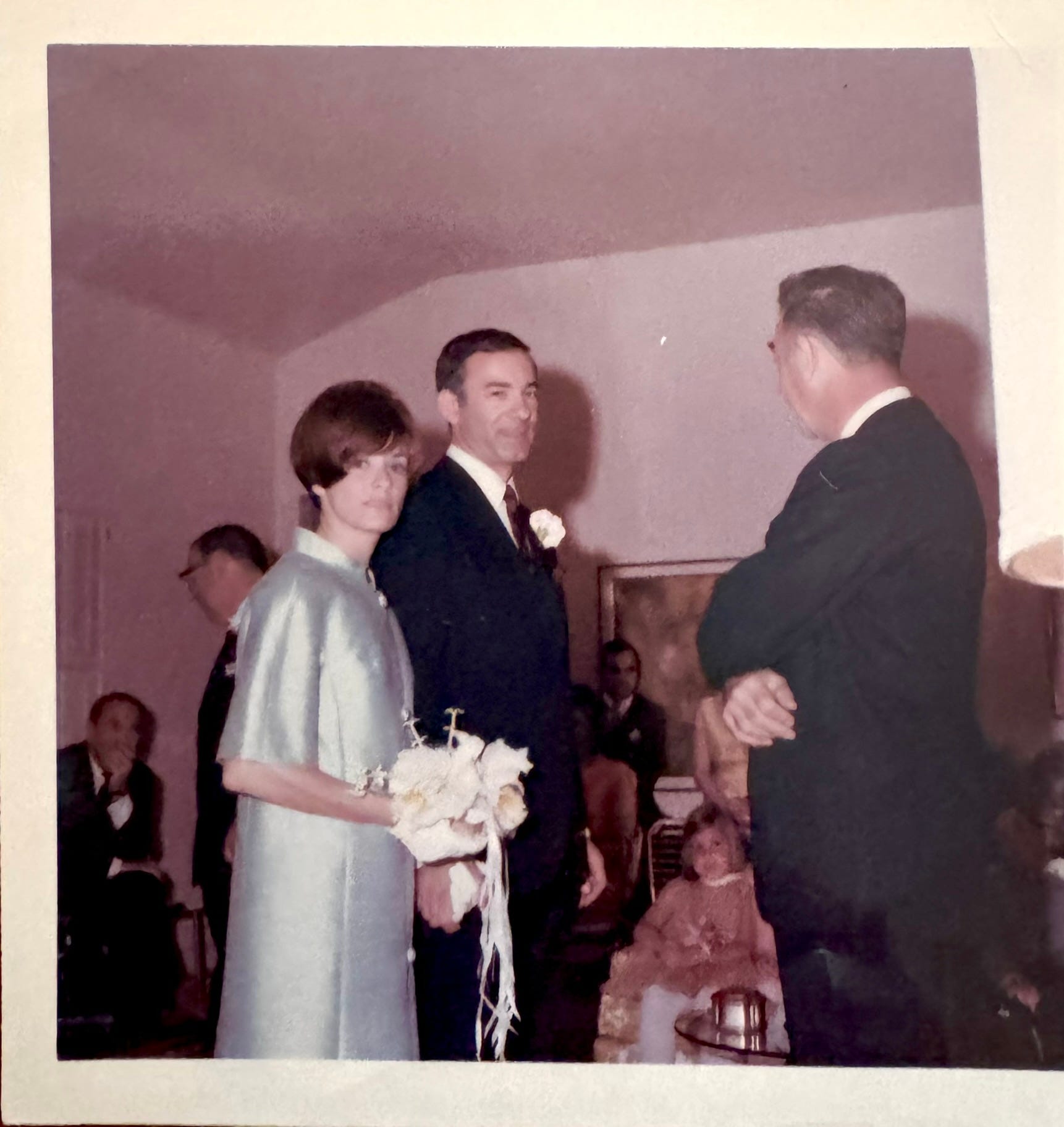
As I sat alone in the waiting room of Cedars Sinai Hospital, less than twenty-four hours after my dad was admitted for what would turn out to be the last time, my mother called, not to ask about his condition, or even to see how I was holding up, but to share with me the very exciting plan she had hatched overnight. Her enthusiasm was instantly triggering, her inability to read a room astonishing. I was worried and scared, awaiting any information the doctors could provide as they continued to subject my father’s body to multiple tests, scans, and X-rays.
In a chipper voice, she pitched her idea: She would pay to remodel my dad’s house, then she would live there until she died, and once she was gone, I would inherit a fully remodeled house! My father was still alive, but she was already making big plans for a house that did not belong to her and that my dad had no intention of leaving to her.
It is important to note, for reasons that will become clear later, that she knew before my dad died that he was leaving his house to me. Let’s put a pin in that for now!
I sat, stunned, in the sterile, white, eerily quiet waiting room in the newly constructed ICU wing of Cedars Sinai. It was modern and cold, and I couldn’t help but think that was an odd choice for an already scary place.
Listening to my mother proudly unveil her excellent plan, I could barely keep from yelling, “Are you fucking kidding me right now?!?”
I was in no condition to withstand what would surely be headed my way should I suggest, even slightly, that perhaps her plan was ill-timed and fucking crazy.
“That’s a very generous offer. Maybe we can talk about it later.”
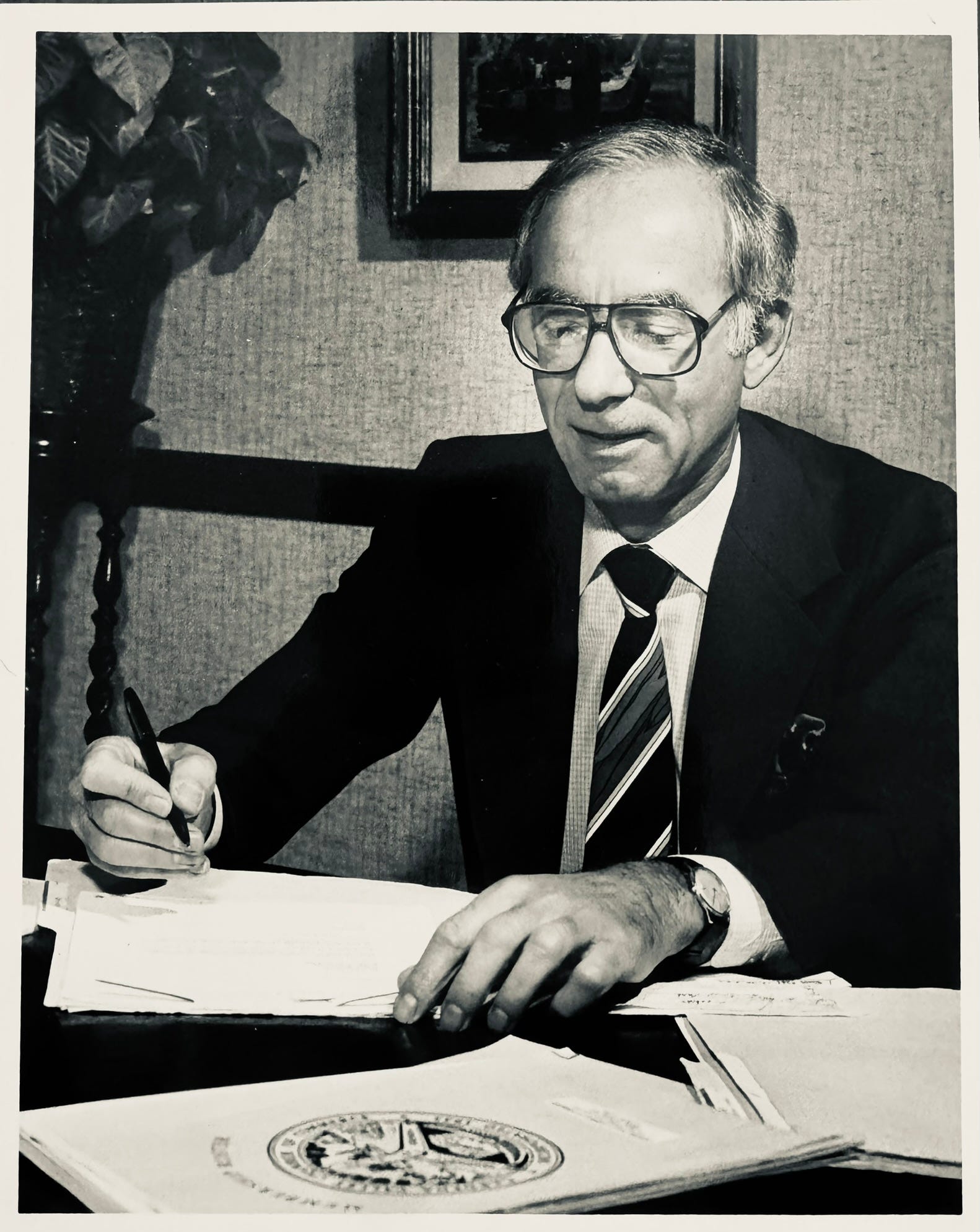
I hated myself in that moment. I had been so well trained to swallow my voice rather than speak the obvious truth; in this case, not just for myself, but for my poor dad, who wasn’t even dead yet. I wanted to explode. I alone was responsible for making decisions on my father’s behalf as he lay in a medically-induced coma, and I was terrified, feeling like a child playing the role of an adult.
My mother didn’t see my father again until the morning he passed, five days later. When it became clear he would not recover, I made the call to pull the plug, and she made one final appearance to say goodbye. Or to make sure he was really dead. I’m pretty sure it was the latter. She appeared unfazed.
Over the course of my lifetime (I am in my 60s), I have seen many therapists, but there are two who were particularly instrumental in helping me walk through my childhood trauma: the first was a gifted somatic therapist I met on Instagram (!) who was the first person to diagnose my CPTSD in 2019, and the second was my EMDR therapist, Bonnie, with whom I began working in 2021. In our initial consultation, Bonnie told me in no uncertain terms that, unlike talk therapy, EMDR therapy comes with an expiration date, and that I would not spend the next several years on her couch, talking endlessly about my childhood; when I was done, I would walk out of her office a free woman, no longer held hostage by my past. She had had so much success using EMDR that she eventually transitioned to using this modality exclusively in her practice.
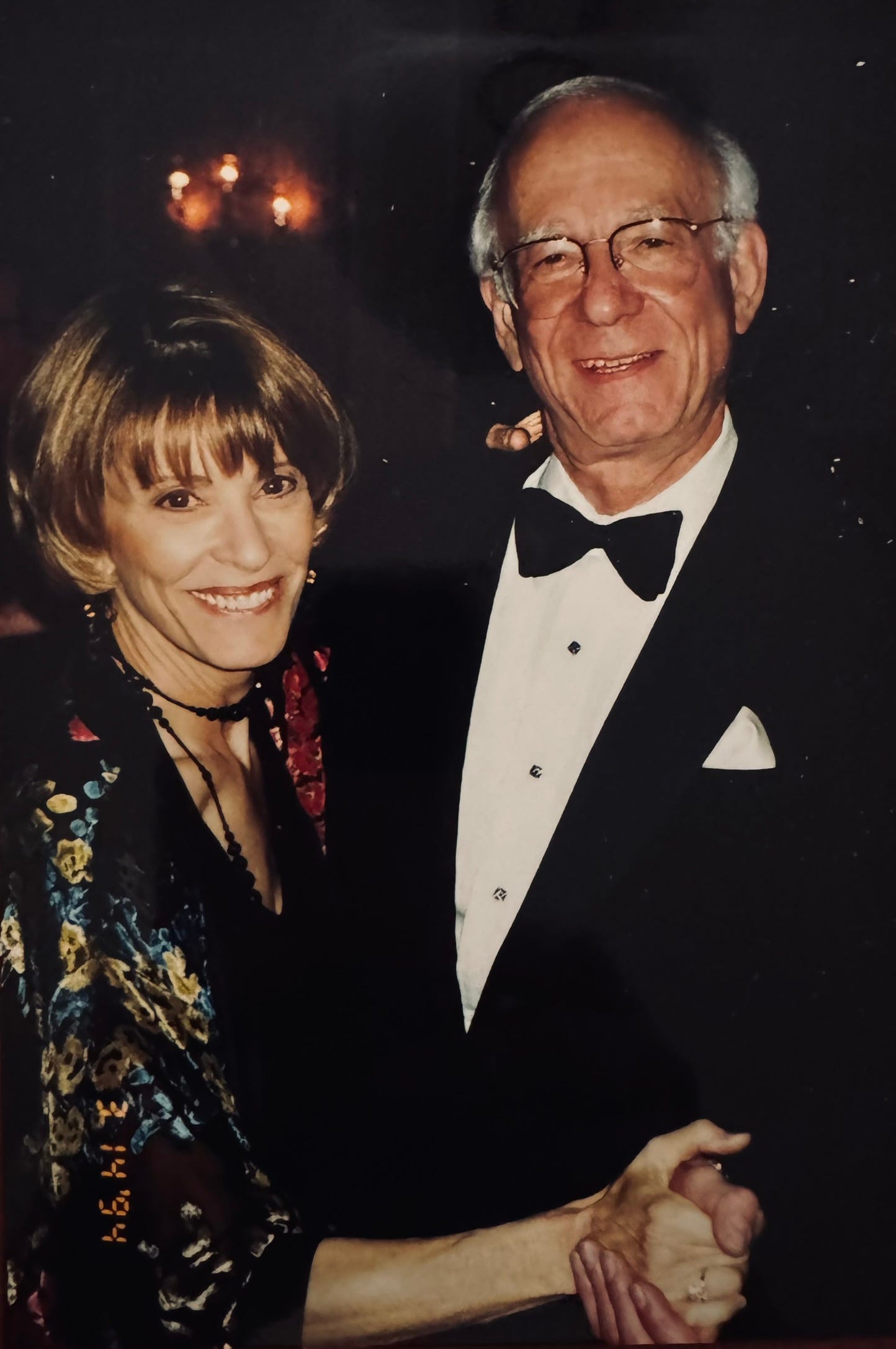
For the uninitiated: EMDR therapy incorporates bilateral stimulation, using a side-to-side stimulus (in my case, a device called a TheraTapper ™️, which consists of two plastic ‘pods,’ one to be held in each hand, that connect to a small plastic box that causes the pods to vibrate, first in one hand, then the other. There are three small dials you can use to adjust the vibration frequency, duration, and intensity.) This dual attention engages both sides of the brain, similar to the natural processing that happens during REM sleep. The stimulation helps your brain re-link the traumatic memory with adaptive, positive information. The memory loses its emotional charge and becomes just another piece of your past, rather than a recurring trigger.1
After about a year of therapy, Bonnie and I agreed that I was done. In our last session, she admitted to me that at one point during my journey, she wondered whether she would really be able to help me. I’m sorry, what?
In addition to CPTSD, I have also been diagnosed as a HSP, or Highly Sensitive Person, a neurodivergent personality trait characterized by a highly active nervous system. This would surprise everyone I know, because I am a fully present, functioning adult. I am great in social situations, outgoing, and can fit in just about anywhere, but after a lot of socializing, I need a fair amount of downtime to reset my nervous system. HSP’s are finely tuned to non-verbal cues, changes in our environment, and the moods of others; from a young age, I could walk into a room and take everyone’s emotional temperature without even knowing them. I could “feel” them. We feel so deeply that I have to wonder whether that made it harder for me to process and diffuse some of those core memories and traumatic experiences, their residue clinging stubbornly to my psyche.
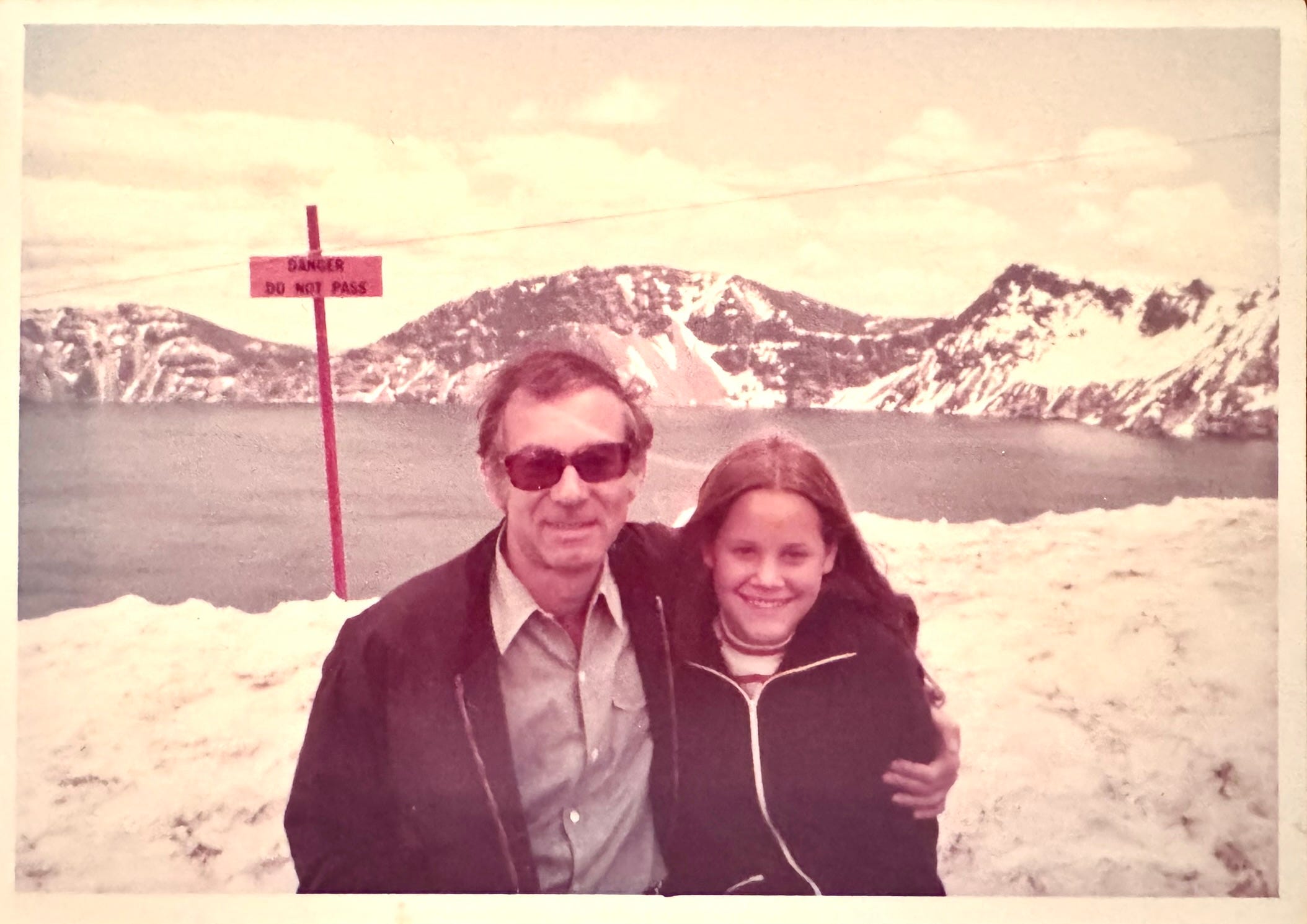
My memories are not linear. Much of my childhood is a blur. If you were to ask me what year(s) I worked at any particular job, I wouldn’t be able to tell you, but I do recall moments and incidents that present themselves like Polaroid pictures frozen in time, or scenes from a movie, including the more upsetting scenes with my mother, like the day in high school when my mother found an (unused) diaphragm in my book bag while I was at my after-school job and wrongfully assumed I was having sex, which I wasn’t; I mean, it would have been the logical assumption, except the only reason I got it was because I had accompanied my best friend to Planned Parenthood so she could get one, because she was going to have sex with her boyfriend and I wanted so badly to be in the club that I decided to get one too. I had no boyfriends in high school, but I did have a situationship with her boyfriend’s best friend, and was eternally hopeful that we would become more. My mother, instead of having the kind of conversation a mother might have with her teenage daughter about that kind of thing, instead wrote me a nasty note and left it on my dresser, then proceeded to give me the cold shoulder, never once offering a conversation or even asking me any questions about it. I never bothered to tell her I was still a virgin because it felt pointless and futile, and she never wanted to hear what I had to say anyway, and I knew how it looked to have the diaphragm in the first place, but also, why the hell was she rummaging through my book bag to begin with?? The boundary violations began so early that I never thought to question them. They just…were.
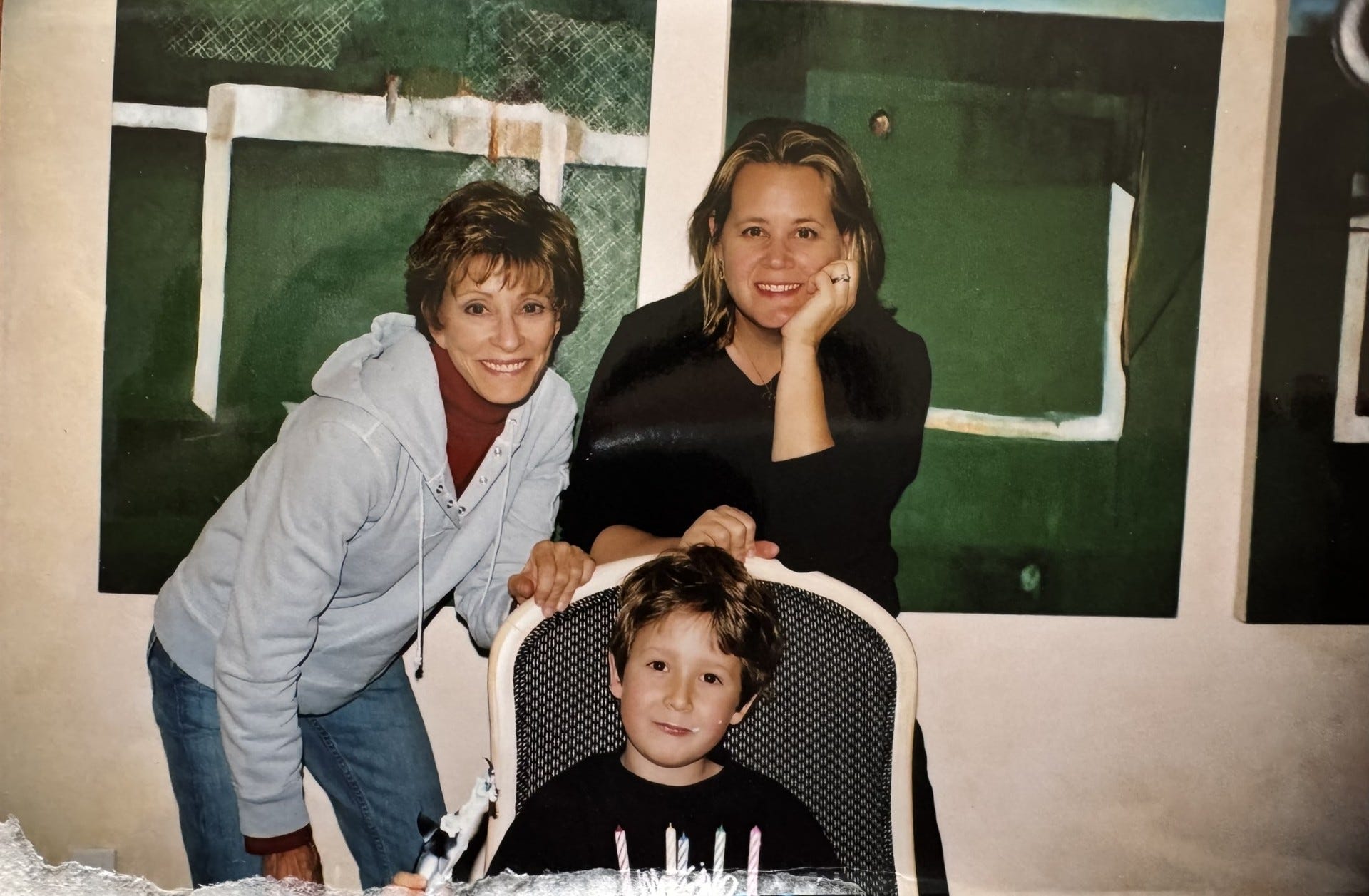
I worked so hard for so long to unravel the damage and terrible messaging that I had internalized my whole life. I had done the deep work. I no longer needed to feel seen or understood by the woman who had birthed me. I didn’t like her, and I didn’t trust her.
Now standing in my studio, staring at my phone, I have to decide whether to ignore this text or open a door that took me way too many years to become willing to close, despite having been told by more than one therapist that I would be well within my rights to do so, and probably should; in the end, I know that any attempt to ignore her message will only result in non-stop intrusive thoughts and a significant cortisol spike.
I close my eyes, take a deep breath, exhale, and open the text.
TO BE CONTINUED… TO FIND OUT WHAT LESLIE’S MOM’S TEXT TO HER SAID AND TO HEAR HOW THIS STORY ENDS, SUBSCRIBE NOW AND WE WILL EMAIL IT TO YOU RIGHT WHEN IT IS PUBLISHED!
Before I even took my thumb off the publish button on my phone, Beatrice had liked this post. Beatrice, you're psychic and you have wonderful taste and thank you!
Just the little peek you've given us here reminds me so much of my ex-wife, who I was finally able to successfully divorce a few months ago. Speaking of which, that stat about divorces initiated by women is interesting--particularly because I left my ex and when I asked my attorney when we should file, she said, "Don't file. Let her do it." I asked why, because I was concerned it would cause a perception problem with the court. My attorney said that, from a strategic standpoint, it's better not to file, because then we get to see what line of attack she and her lawyer were using, and we could respond to that. The other reason was to just make her spend the money on the filing fee.😅 She also assured me that the court didn't care who filed first--and she was right.