

Making All My Clothes (And Shoes!) Changed My Life. Here's How You Can Do It Too
SPECIAL FREE-TO-ALL FEATURE so take advantage of this generosity and then pass it around! Give it for Valentine's and pretend you paid a lot for it if you want, I don't care. Love, Jane
Hi!!!!!!!
All those exclamation points are because I'm so excited - for so many reasons – about this story today. I find it - and Jasika herself - incredibly inspiring. She and I bonded tightly over the value of this message as we worked together. Her email to me one minute ago, when I told her this was going live, said, “If just one person decides to try to learn how to knit again or buys a button to replace on their favorite old shirt, our work on this piece will have not been in vain 💪🏽!” Hear hear (or here here?)! I won't go on and on with all the specifics of my admiration for her and her story, because let's do that in the comments so that I don't give anything else away. And abiding by our pending new policy of short intros I'll just say that Jasika (you can also follow her on IG for more of her goodness) is not only a phenomenal new writer for AJPT (thank you thank you thank you, Jasika!), she's also a known and apparently great actor. The only reason I've never seen her in anything is because I only watch dumb reality TV and documentaries. Don't even tell my best friend Courteney that I've never watched “Friends.”
I adore you and I'll see you in the comments!
Jane
PS See that one-paragraph-intro action?! I can do this!
PPS When I was going crazy wanting to write more to you last night, I took it out on Jane's Phone over here in case you want to go there and talk about something wholly unrelated to today's amazing piece that I am already getting hate on in Notes. Only if you like that sort of thing, as I do. Love you!
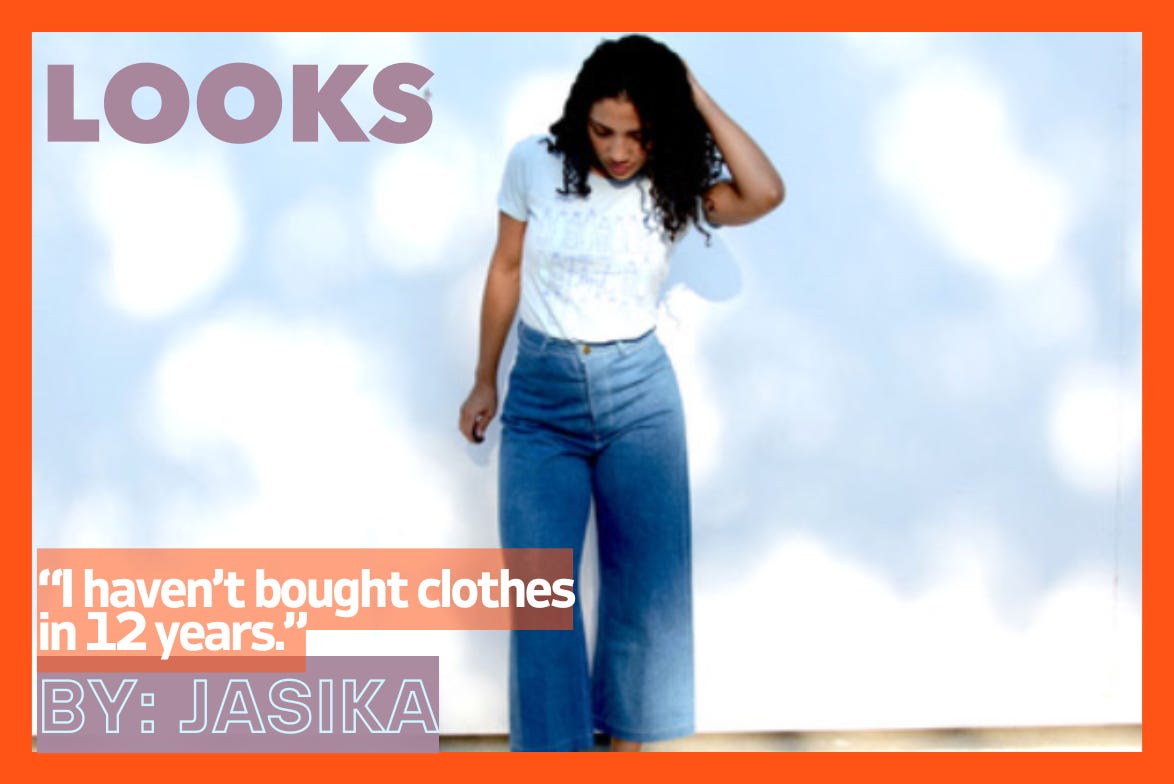
By Jasika Nicole
The first item of clothing I ever made for myself was what I referred to as a “halter top”, but what was actually nothing more than a sneeze of sequined fabric with thin elastic cording sewn onto its edges. It barely covered my tiny side boobs- if I Tootsie Rolled too hard in the club, the ensuing wardrobe malfunction would have scarred me for life. But that didn’t feel nearly as important as the realization that I could make my own clothes!
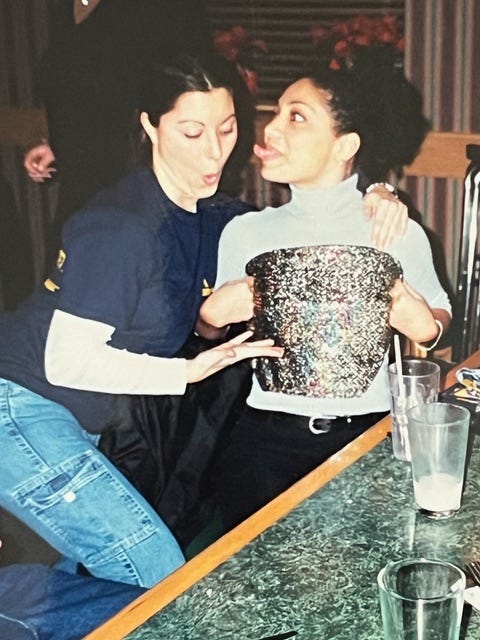
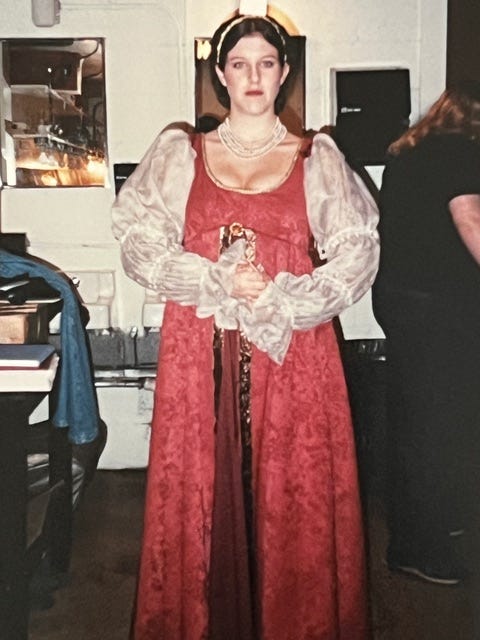
It was 2001 and I was in my third year of undergrad as a theatre major when I sewed that halter top. I had just passed my costume design class for the semester, which, despite my love of fashion, I had disliked. The collaborative aspect of design for theatre put me off (I found it restrictive and boring), but it was soon clear that what I lacked in an aptitude for theatrical design I more than made up for with a competence in costume construction. After I completed my first big project (Lady Capulet’s gown in Romeo and Juliet), I continued spending my weekends in the theatre’s costume shop, draping dress forms with whatever fabric I could find in the scrap bin and cursing at the faulty old industrial sewing machines.
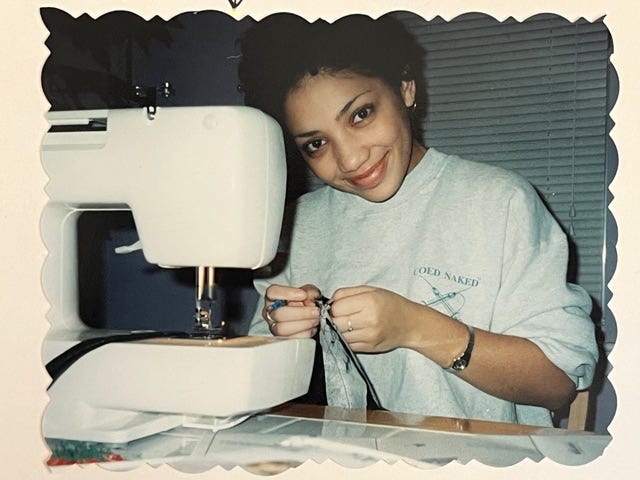
My mom bought me a cheap Brother sewing machine for Christmas that year so I abandoned the costume shop and turned my dorm room into a one-woman sewing factory. I found my way to commercial sewing patterns (the kind our moms and grandmas bought from Joann’s Fabrics), and immersed myself headfirst into understanding how to use them.
The pattern designs from Vogue and McCalls were my favorites, alternative and cool for the time, but the learning curve was steep. The instructions and illustrations were abysmal and keeping track of all those floaty pattern pieces covered in mysterious symbols was maddening. Furthermore, I didn’t yet understand which types of fabric I should be using for the garments I wanted to make, so I ended up with dresses that were too lightweight, bodices that didn’t keep their shape, and zippers that bunched into a wavy ripple all along my back.
Once I made a pair of pants out of fabric that didn’t have 2 directional stretch, so they wouldn’t expand around my body at its widest points. When I finally completed them I couldn’t even pull them up past my hips! Sewing was often disappointing when I first started out, but I didn’t let that stop me. I considered all my failures as learning successes, ways of cultivating not just a skillset, but also a patience with myself to not give up simply because the results weren’t immediately perfect (perfectionism is both a tool of capitalism and a thief of joy, in case you didn’t know!).
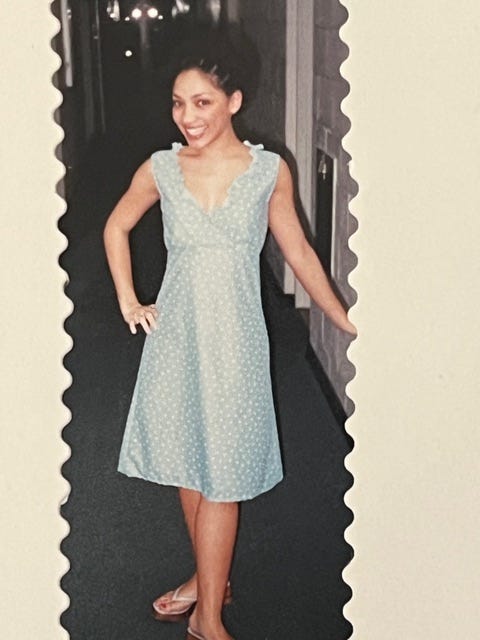
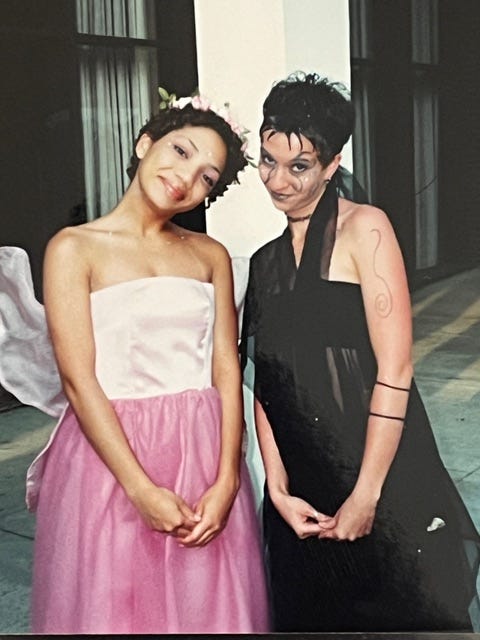
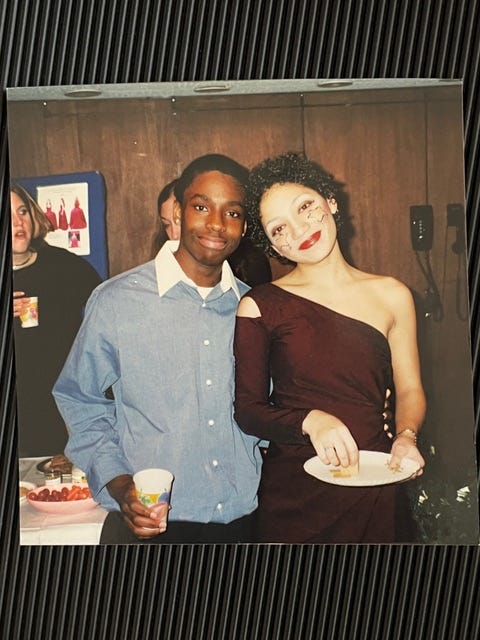
After college I moved to NYC to begin my career as an actor, and between auditions and waiting tables I had little time to devote to my college hobby. My sewing machine lived far back in the closet of whatever apartment I happened to be living in at the time, making appearances only when a garment needed mending or a hem needed adjusting.
When a poorly-built building in Bangladesh occupied by garment workers collapsed, killing and injuring thousands, I was heartbroken. And alarmed at my own complicity in it.
When my first big tv show went to series and I began getting invited to PR events, I balked at the “rule” that I could be photographed in a red carpet look no more than once, encouraging me and other young actors to participate in the proliferation of clothing consumption. The pitfalls of fast fashion were becoming widely known at this point, an industry proving itself to be detrimental not only to the environment but also to the communities of people overseas employed by clothing manufacturers (the acclaimed documentary The True Cost is a great watch for those interested in learning more about fast fashion’s destruction).
As much as I hated filling up my closet with junk, I was at the beginning of my career, naive and afraid to rock the boat, so I did what was expected of me and scoured Urban Outfitters and sample sale racks, hunting for anything in my size that was vaguely stylish.
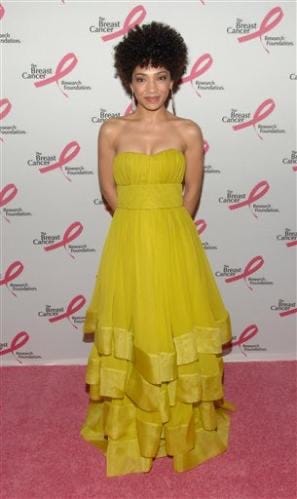
Then came the devastation of the Rana Plaza tragedy, when a poorly-built building in Bangladesh occupied by garment workers collapsed, killing and injuring thousands. I was heartbroken by the disaster and alarmed at my own complicity in it, as I was a consumer of some of the brands employing those manufacturers. I started paying more attention to sustainability in retail, willing to pay higher prices for clothing made of quality materials by garment workers getting paid fair wages, but the designs at the time were often unremarkable and shapeless, and didn’t embody my aesthetic at all. I wondered if it was even possible to be a lover of fashion while also being a responsible consumer of it.
And then I remembered: I could make my own clothes!
I wasn’t amazing at sewing, not yet... but maybe if I worked hard, I could be.
I dusted off my old brother sewing machine and committed to only buying second hand clothing and sewing my own garments from that point on. The idea was ambitious, but I was determined and inspired (for the record, I’m an Aries sun, Aquarius moon/rising). I started collecting commercial sewing patterns again but was soon introduced to the online sewing community, a group of industrious people from all over the world dedicated to sewing their own clothes, making and selling indie sewing patterns and books, and sharing the knowledge they gained through blogs and social media. Reading their posts about their sewing escapades encouraged me to start my own blog about my journey into building my own wardrobe, which eventually turned into the TryCurious blog and JasikaIsTryCurious IG account.
This time around I took my clothes making very seriously, dedicating all my free time to my sewing practice and even bringing my travel sewing machine to tv jobs I booked out of town. Spending time at my machine was infinitely more fun than wiling away the hours watching hotel tv, and the more time I spent on my hobby, the better I got at it. I learned how to adjust patterns to fit my body, since I’ve rarely been able to find RTW garments that accommodate my specific combo of small boobs + small waist + big ass.
90% of my closet is now handmade. I even make my own bathing suits and high-heeled shoes!
As I was smack dab in the middle of my vintage phase, I became obsessed with Gertie’s Book For Better Sewing and made more fit n’ flare dresses than Modcloth would know what to do with. I learned how to Frankenstein patterns (also called “pattern hacking”), which fits certain elements of one pattern onto another to come up with a unique design. I figured out what my seasonal color palette is (I’m a deep autumn!) and only bought fabric that I knew would look good against my skin, since by this time I was noticing that I had many beautifully made pieces in my closet that I never wore because the color made me look washed-out or clashed with my hair.
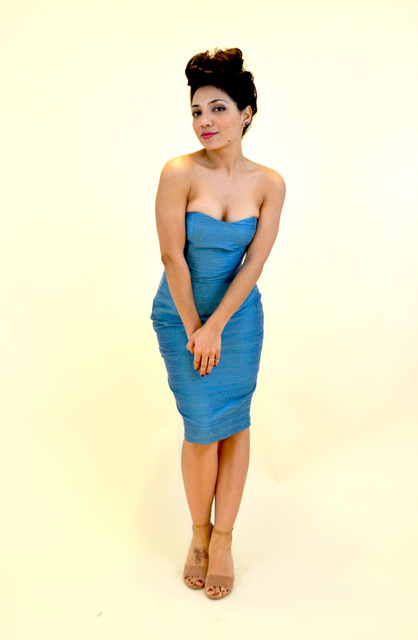
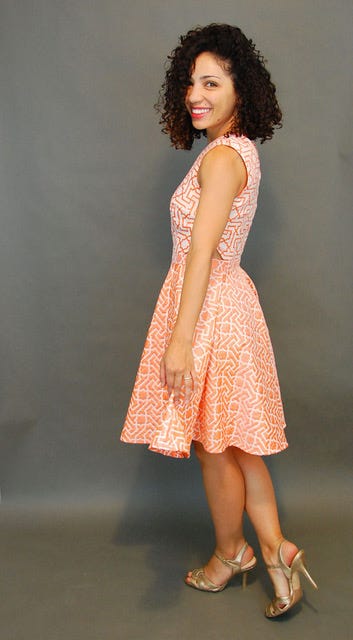
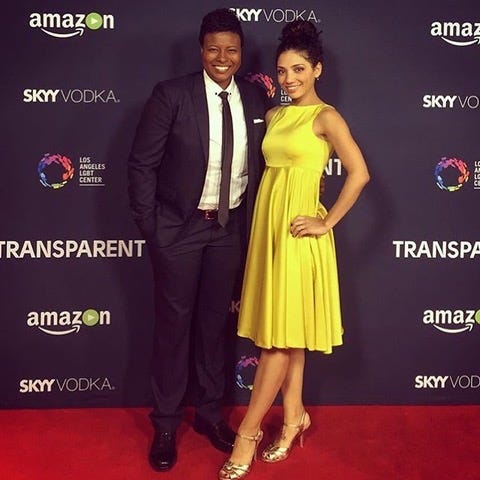
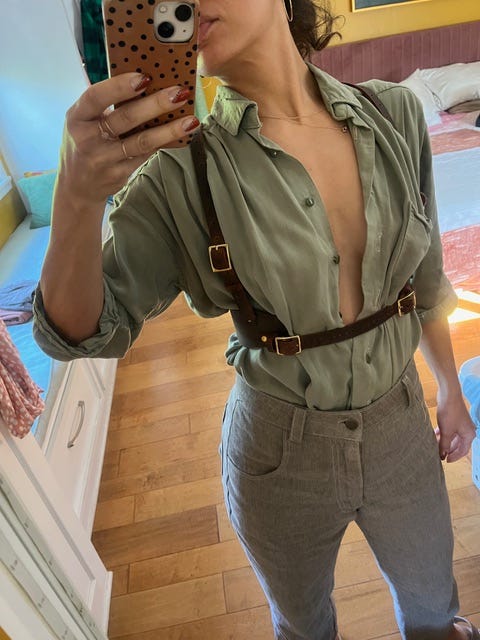
My hard work paid off. It’s been twelve years since I first committed myself to not buying RTW clothing, and my skillset is so solid now that I can see a garment in a store window, snap a few pictures of it’s insides with my phone, and make a version of it perfectly tailored to my body within a matter of days. 90% of the clothing in my closet is me-made, full of staples like jeans, pussy-bow blouses, wool jackets and button downs. I’ve even made myself bathing suits and high heeled shoes!
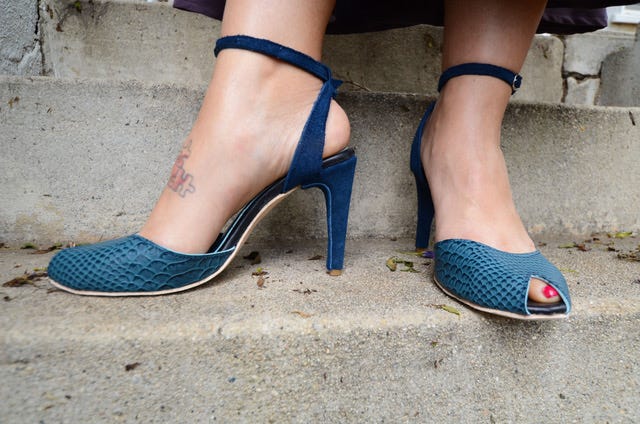
It’s important to note that making clothes isn’t the only or even best way to combat the impact of fast fashion; buying new fabric is still part of consumer culture, and depending on what kind you sew with, new fabric isn’t necessarily sustainable. Additionally, not everyone has the time, resources or skills to make their entire wardrobes by hand. I recognize that my own dedication to craft exists because I don’t have kids and I have a non-traditional job that affords me lots of extracurricular time. Thankfully there are many other ways to keep textiles out of landfills and off the shorelines of the world’s least developed countries, since a huge percentage of America’s donated clothing gets shipped and left to rot elsewhere.
Up-cycling textiles and clothing, participating in community clothing swaps, buying second hand (Depop is my current favorite online thrifted retail space, but there are many others!) and mending/altering clothing we already own to give it new life and make it last longer are great ways to shift our dependence from fast to slow fashion.
Many people assume that sewing my own clothing is cheaper than buying it in a store, and that’s not exactly the case (or the point). Fast fashion, like Zara, H&M and Shein, use cheap materials and labor to get new clothing into their stores as quickly as possible, feeding our society’s frenzy for new, now, next. I don’t want to wear cheap material (polyester and rayon make me sweat like a whore in church ) and I don’t want to wear what’s trending in Tik Tok shops, either. I want luxury and elegance!
Sustainably sourced yardage of washed linen, silk velvet and selvedge denim is pricier than items you might find at your local Target, but much less expensive than the designer racks at Saks (which, by the way, are filled with garments that are still likely to be made with some percentage of manmade fibers). Considering the fact that not only are my pieces made of fine materials but are also tailored to my exact measurements, my wardrobe is priceless because it’s one of a kind.
The sentimental value of my wardrobe cannot be understated, either. Each piece is almost like a journal entry of where I was, physically and mentally, when I made it. Last year when the LA fires ravaged the neighborhood adjacent to mine, I packed a suitcase in the event that I would receive evacuation orders and have to leave my home in a hurry. Having spent my childhood moving from one shitty apartment to the next, buying my own home as an adult represented safety and stability for me, and the threat of losing my house and all the beautiful handmade furniture, decorative objects and DIY projects I had filled it with was incredibly difficult. I tried to combat my fear by reminding myself that things are replaceable, people aren’t. I threw in a few changes of clothes, some toiletries, and some sentimental items, like photo albums from my childhood. But what I really wished I could have brought with me were my clothes.
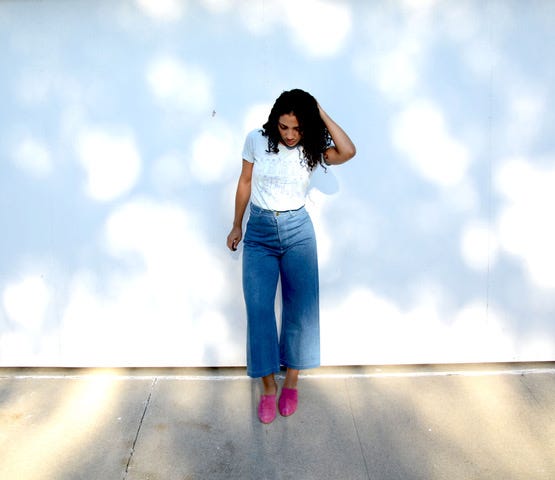
I wished I could save my favorite pair of jeans, high waisted and wide legged with a concealed button fly, sewn in a light colored, sturdy denim. [You can see these exact beauties below, because Jasika was so generous about supplying so many visuals for you! -Jane] I’ve worn these jeans a million times over the years, amassing multiple period stains in the crotch and food and drink spills everywhere else, with buttons replaced and the waistband re-topstitched more than once. These jeans have traveled out of the country with me, shown up in dozens of audition tapes, and held my body together as I swung my young nephews around on the playground.
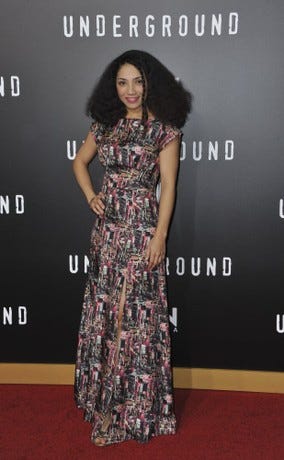
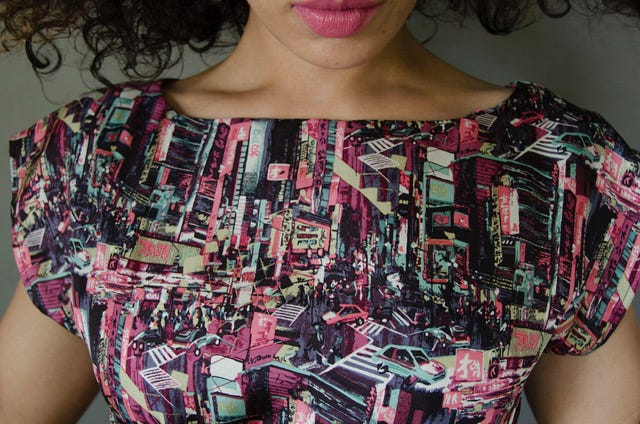
I wished I could save the very first dress I made and wore to my own red carpet event. In season 2 of Underground I played Georgia, a mixed race woman “passing” as white and using her privilege to help enslaved people escape on the underground railroad. She held secret meetings with her abolitionist women friends to sew hidden maps onto quilts that they would then give to escapees to guide them to freedom. Wearing my own handmade dress to the premiere seemed a tiny but poignant way for me to honor the work of women across history who used their skillset to incite positive change in a world in which they had little power. My dress, made of Liberty silk, donned a stunning print of a shiny Tokyo cityscape, and I felt both proud and beautiful wearing it.
I wished I could save the pink velvet tiger-covered coat that was fresh off my sewing machine, and all the hand knitted sweaters I had spent hundreds of hours stitching. I wished I could save everything in my closet, evidence of a life well lived.
My home was thankfully spared from the fires, but in the aftermath of their devastation I was embarrassed that I had wanted to save my clothes instead of my old love letters or my college sketchbooks. My partner at the time gently reminded me that my clothing was a declaration of love, each garment proof of my affection for myself, and as much an artistic expression as anything I’ve ever drawn. Their reframe was helpful, an opportunity to stop judging myself about my passion for fashion and instead recognize it as the healing modality it has been in my life.
Sewing has gotten me through so many lulls in my work as an actor when my value felt rooted in how regularly I was booked. It severed my dependence on RTW and allowed me to engage with fashion in a more holistic way. It challenged me as a craftsperson, helped me develop a personal style that made me feel confident in my body, and allowed me to inspire people all over the world to develop their own special relationship to craft.
Plus, it makes middle age feel fierce as fuck.
Editing this piece reminded me of when I was 13 and my best friend and I decided we would wear a dress to school one day a week. Since I didn't have hardly any, I started making them. They were always half falling off, but it was really fun to do and so satisfying. I am absolutely going to sew something again now because of you, Jasika. I think I have to start with something really simple like the sassy pillowcase dress though, and maybe work my way up to the sassy tie-skirt. I'll show you what I do for your critique.
This is so fucking cool