

UNPOPULAR OPINION: The World Cup Is Sad
The 2018 World Cup made dealing with my mother’s passing tolerable. This one’s pathetic and tainted by political shit. I can’t help but compare and contrast. Here goes.

Hello, Weird Ones!
I am aiming to make this intro historically short, because the story that follows it today is meaningful and I don’t want any of my usual bullshit to detract from that. HOWEVER, if you are someone who like me quickly cancels subscriptions when you get the emails that basically serve as a reminder that you signed up for something that you didn’t really want to deal with, I encourage you to wait to cancel until after my next email (other places call it a Newsletter), because in that one I am going to be giving away a TON OF FREE CLOTHES AND SASSY MERCHANDISE that I think you are going to love. Plus it’s free to you subscribers, so even if you don’t love it, who cares. Give it away.
As much as I appreciated the concept of one day becoming the “figurehead” editor that people used to say I was back when I was a 24-year-old punk running Sassy magazine, I then and now still get hyper deeply involved (unhealthily codependently so) in everything I publish. So there is always a story about the story and this one, as you will see in the text exchange between me and Charlie below, made me cry.
I love Charlie’s writing and his honesty and openness and if you get to the end of this piece and its final photo without at least that pre-cry feeling in the back of your throat, let me know how you were raised or what type of therapy you are in. Either way, I am making this post free to everyone and the comments open to all so you can tell me there if you teared up or not. Or anything else you want to say, including Go Knicks!
I love you and I thank you for being part of this emotional place.
xoJane
PS My next email will also contain the exciting FINAL hiring announcement for those of you who are still interested in the writing/editing job here. The candidates narrowed down yourselves from the thousands into the hundreds in the last interview round and you are all still SO GOOD. So I won’t keep you waiting beyond the next one of these non-newsletters, I promise.
By Charlie Connell
My first taste of international soccer was in 1990 when I attended a friendly between the Soviet Union and the United States at Stanford Stadium. A year later, the Soviet Union would be in tatters, but the Reds were dominant that day as they cruised to a 3-1 victory.
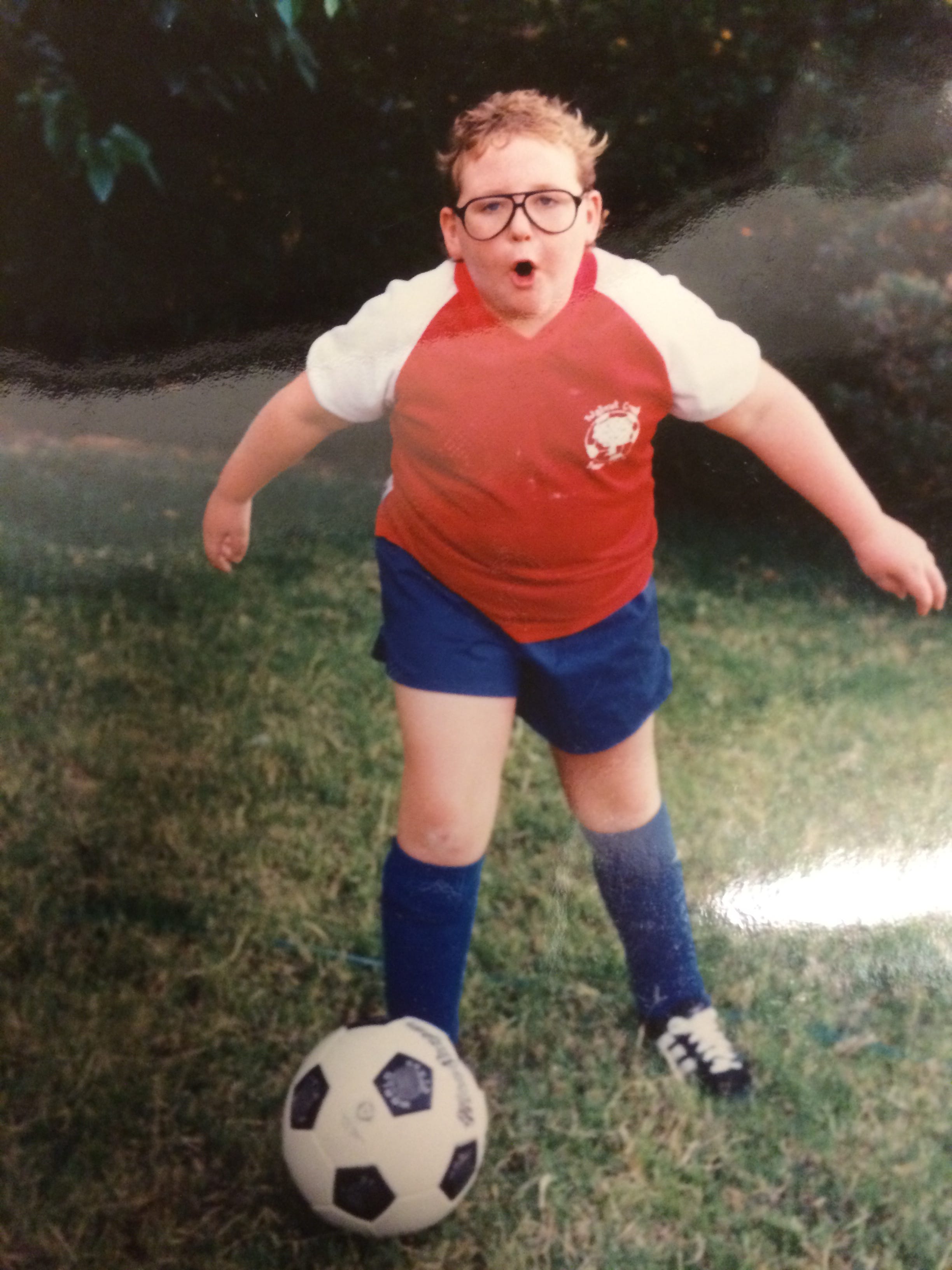
I was there with my friend Tim and his dad, a soccer-obsessed man and local coach who would go on to throw a temper tantrum on the field after my team beat them for the Walnut Cup. Like pretty much every other kid who grew up in California in the 1980s, I played soccer growing up, but I never really cared much about the sport from a spectator’s perspective. I mostly liked playing keeper because they let me wear my Hartford Whalers hockey jersey and I didn’t have to run around that much. But sitting in that stadium with 60,000 people, plus a dash of Cold War-fueled sports jingoism, worked its magic on me, and I was hooked.
I may have only been 10 at the time, but I knew on the way home that someday I’d go to a World Cup match. Now here I am at 45 and the World Cup Final is going to be played 6.8 miles from my apartment — that’s practically spitting distance! — and despite being smackdab in the middle of the middle class, I’d have to sell every single one of my possessions to get a single ticket in the upper deck for Norway/Senegal, the cheapest of the matches at Jersey’s MetLife Stadium. When it was announced that the United States would be hosting this year’s tournament, my mind was filled with sepia-toned images of me crashing on couches around the country, before going to a match and screaming for the glory of Ireland (or South Korea, or Ghana, or whoever. But not England. Never England). Instead, I’m left sitting at home, watching the World Cup on TV, the same way I have for every tournament since 1994.
Actually, that’s not true. Eight years ago, I watched 63 of the 64 matches played in Russia. Without accounting for stoppage time (if I were to take the time to explain the intricacies of the clock in soccer, you’d unsubscribe from Another Jane Pratt Thing immediately, and frankly, I wouldn’t blame you), that’s 5,670 minutes of soccer. If we make a tidy little estimate and add some stoppage time to pump that number up a tad, you’ve got four entire days of watching soccer.
It was by far the most engaged I’ve ever been with the event, or really any sporting event, in my entire life. I don’t know if I’ve ever binged a show with this much regularity or dedication. I was locked in, as the kids say (although if I know the phrase, it’s probably cooked by now). And yet, I barely remember anything about it. There isn’t a goal that comes to mind, nor a controversial red card I’m still steamed about. We didn’t even have the traditional dumb-as-hell off-the-field controversy involving the U.S. team because they had the audacity to crash out to Trinidad and f’n Tobago during qualifying, so how the hell is my brain so dysfunctional that I could have watched four days’ worth of soccer with nearly zero memory of it?
It’s all about timing and location. I wasn’t watching all of those games at home, or in a raucous stadium, or at the bar with friends. Over the next month, there will be dozens of different commercials showing enthralled fans experiencing football glory in those places, as well as many others, but I guarantee there won’t be an ad recreating how I watched the tournament — sitting in a green vinyl chair in the ICU unit of Baptist Medical Center in Jacksonville.
“I’m a mama’s boy. Always have been.”
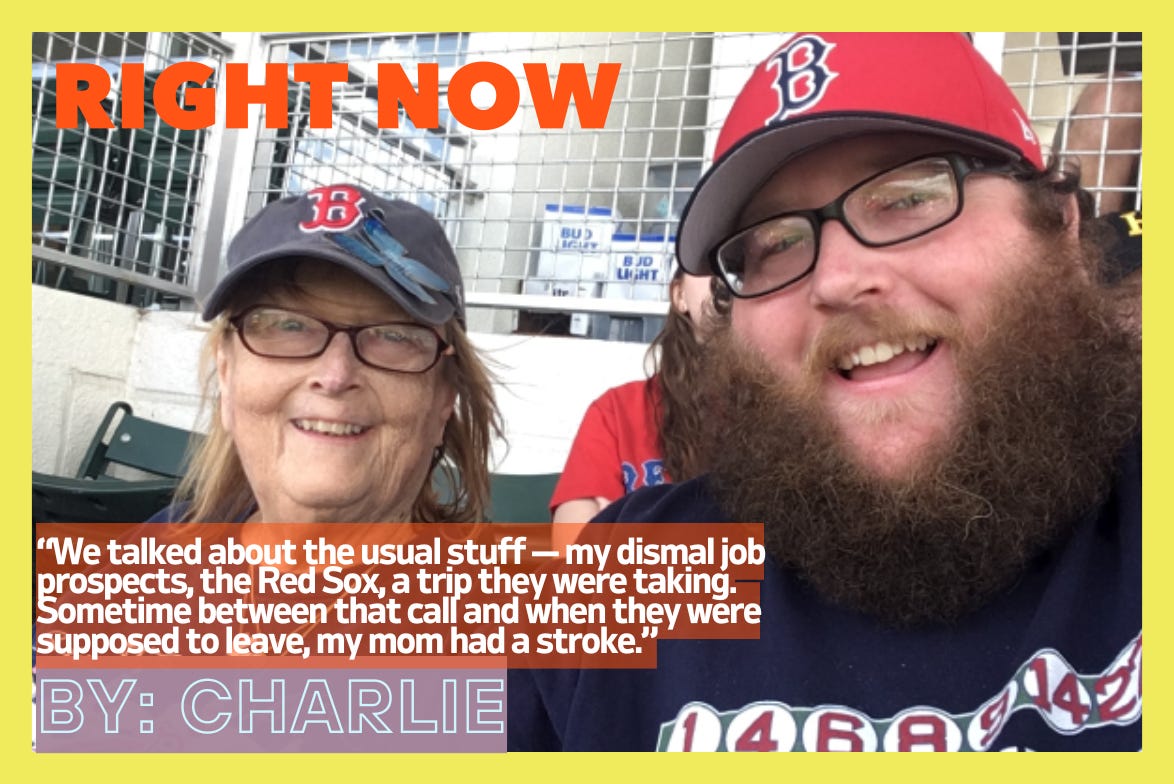
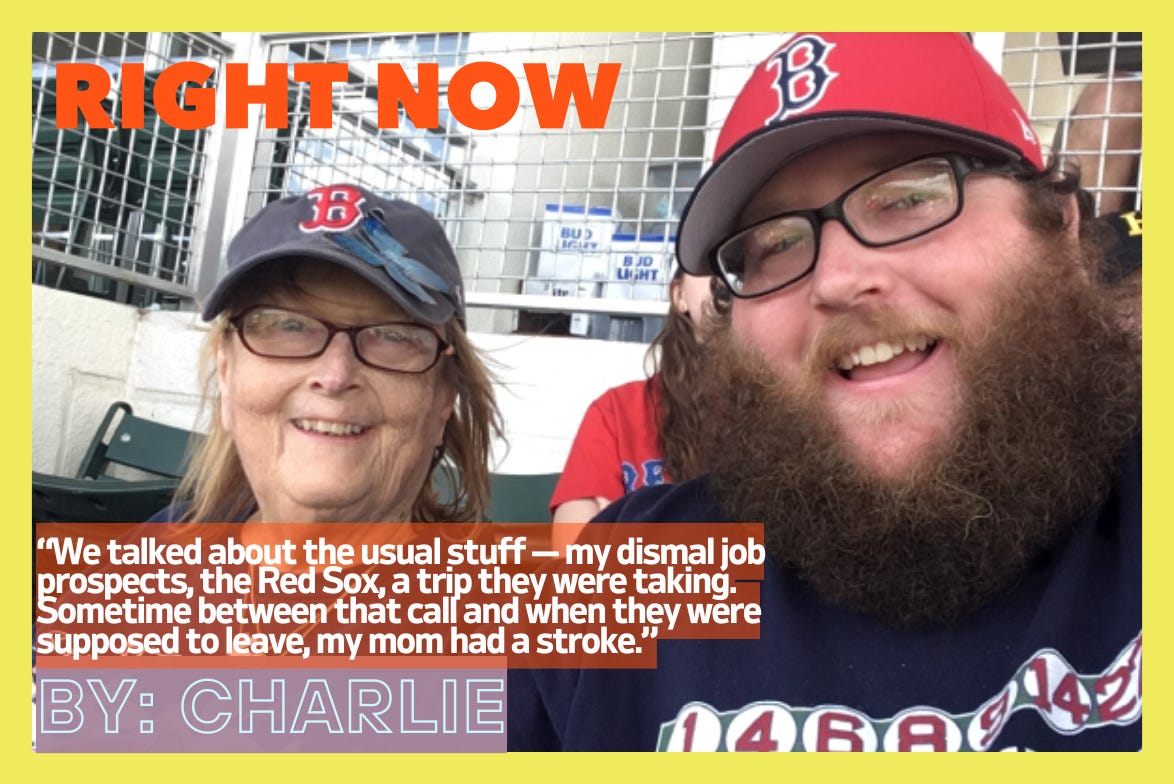
My mom had a stroke in late May 2018. I had talked to my mom a few days before. We talked about the usual stuff — my dismal job prospects, the Red Sox, how downhill one of her former favorite restaurants had fallen — as well as the upcoming trip my parents were taking to southern Illinois for a Connell sibling reunion. Sometime between that call and when they were supposed to leave, she had a stroke in the laundry room. My dad was there, and she was able to get to a hospital quickly. By the time I was able to fly in the next day, she had been moved from the local hospital in Fernandina Beach to the aforementioned ICU. I took an Uber straight to the hospital, and when I found the room, my dad had stepped out for a bit. There was a nurse who had me put on a comically small sterile gown over my clothes, then I think they explained a little about how she was doing. But it may as well have been the unintelligible honking made by Charlie Brown’s parents, because all I could focus on was this Charlie’s mom lying unresponsive in a hospital bed, hooked up to machines. There were so many machines.
Those first few hours felt like a firehose of information was spraying me against the wall; it was nearly impossible to make sense of any of it. I had no idea how long it would take for her to recover, if full recovery was even on the table at that point, or how intense the process of recovery would be. As far as I remember things, I truly believed that these were the only considerations that needed to be made. The job was to be there every step of the way — from that very moment to full recovery — and I was ready for it. Absolutely buzzing with purpose, I wanted to pitch in and for a second thought that there was actually something I could do. I have no idea where this idea came from — did I think they would deputize me to become an assistant phlebotomist? The reality is that there was nothing to do but wait.
My mom and I used to spend hours sitting at the kitchen table and talking until the wee hours of the morning. For most of my life, she’d have a Diet Coke and a Salem Ultra Light 100; she finally kicked the habit in her sixties, and I’d have a Diet Coke or a whiskey (also dependent on the era). Why should our traditions have to change just because she’s in bed with a tube down her throat, helping her breathe, and mostly unconscious? So I’d talk to her. A lot. About everything — the Red Sox, my friends, my girlfriend (and, spoiler alert, future wife) Kim, my job search, family, what I was watching. There was a lot to cover, as there always was, but a one-sided conversation can only go on for so long, even with a prodigious bullshitter such as myself.
As the hours became days, it got increasingly harder to fill the time. My dad and I were sleeping in the room; we lived a 45-minute drive away, way too far away in case something changed. For those first few days, my mom’s sickness consumed every minute of our attention. Still, after days of jumping at every beep and memorizing the acceptable range across all the categories on the heart monitor, my brain was on the verge of liquifying without at least a little escape.
Right on cue, Russia opened up the 2018 World Cup with a 5-0 thrashing of Saudi Arabia, and my prayers for a distraction had been answered. The group stage of the World Cup delivered three games per day, spaced out beautifully to give me a bit of respite. Having the games on distracted me from obsessively googling “how bad are strokes” for the 10,000th time, but I could watch them sitting in the green vinyl chair right next to my mom’s bed, staying alert for any change in her status or a doctor’s visit, and free to keep on running my mouth to continue our 37-year-long ongoing conversation. Since the games were in Russia, there was a morning game, a noon game, and a 3 pm game. Just like that, I fell into a routine.
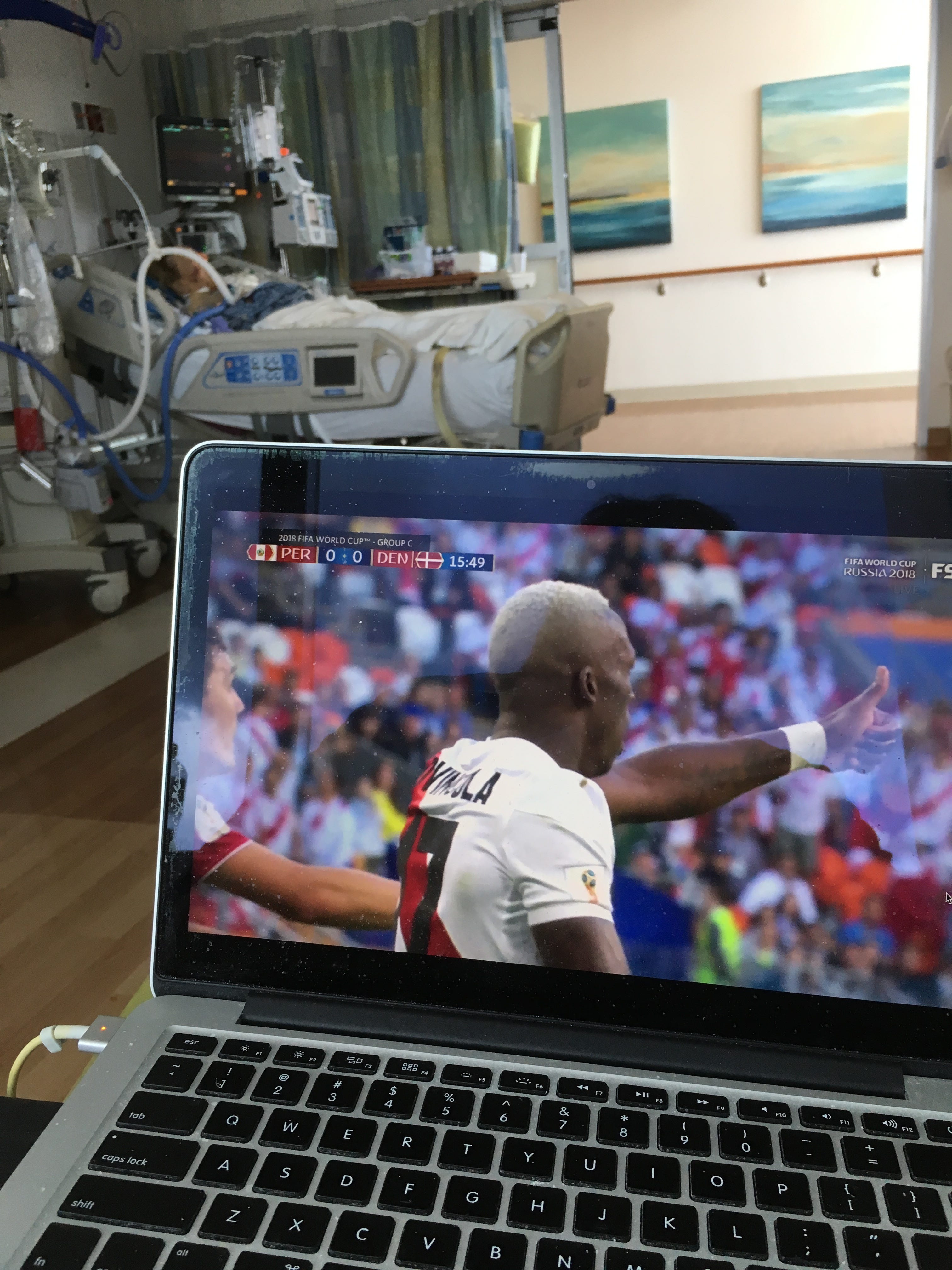
I’d wake up ridiculously early each morning with an x-ray tech shaking me awake and putting a lead blanket on me because the hospital doesn’t just hand out free vasectomies via radiation. I’d stumble down to the cafeteria, get some breakfast and a coffee, then watch the first match. When it was over, I’d give my mom a kiss and head outside to read or walk around. I spent a lot of time sitting next to a metal frog. Once I was refreshed, I’d head back in to spend a few more hours with my mom and watch the noon game. Then, when it was over, my dad and I would go grab lunch (hospitals have remarkably tasty corn dogs, FYI) and be back in time to watch the third match of the day.
Sitting there and watching my mom sleeping while attached to tubes and “wearing the hat” (the term my dad coined for a device with a ton of sensors and wires she had on her head to monitor her brain function) unsurprisingly led to some very dark thoughts. Beyond the pessimism and fear I was trying to build a dam to keep away was that same formidable opponent from before — helplessness.
There was nothing I could do, and while I accepted that, it still tore me to shreds during my idle moments. Watching the World Cup gave my days a structure. Or at the very least, the concepts of a plan for structure. My desire to watch the matches forced me to squeeze other necessary activities around them. Prior to my mom’s stroke, the longest I’d spent a hospital in a single stretch was under 10 hours. Now I was living in a hospital, living out one of my worst nightmares move at a glacial pace. Each day brought just enough good news to keep hope, but never enough to begin crafting an action plan for the unknown “what happens next.” I was living in limbo, and it decimated my ability to be a functioning person. Some days, I’d have three or four meals (while grabbing snacks every time I left the room) simply because the quick sugar rush gave me a feeling besides terror. Then some days I wouldn’t leave the ICU room at all, I’d just stare and think as many positive thoughts as I could; it felt like the only thing I could control. I needed a schedule, and a silly little soccer tournament provided it.


For three 90-minute periods each day, the only whistles were coming from the TV. The only time my blood pressure went up was while yelling about an egregious red card. The only drama I was focused on was the fallout of Spain flaming out to the hosts early in the knockout stages. I cheered for all six Harry Kane goals (COYS), and booed every time a Portuguese player hit the deck faking an injury (there was a lot of booing). All the feelings and concerns I had were washed away, helping me keep my strength for the moments that would call for it.
“Only hours previously, we had been having discussions about where to move her once we were released from the ICU. We had even joked about how she’d enjoy being so close to a Taco Bell. Then something turned, something changed.”
Every day was a variation of the same. The meals and matches changed, the vigil around my mother remained the same. By the time I had really settled into this routine, it had started to become, not normal, of course, but manageable. Like learning any new skill, the more reps I had, the better I was getting at figuring out how to exist in this new terrain. When the doctors came in to give updates, I wasn’t overwhelmed, I was cool and collected, learning about the condition and understanding the gravity of everything. I still couldn’t do anything, but the helplessness was gone. I had learned that my role was cheerleader. Keeper of the vibes. Czar of positive energy. The outcome wasn’t in my hands, but I could keep on telling her every little thing that came to my mind, just like I always had. Things were still dire, but we were figuring it out.
It had been a little over a month, 36 days if I remember correctly, and updates were few and far between. She wasn’t getting drastically better, but she wasn’t getting worse either. Until, on the Fourth of July, things started moving incredibly quickly. Only hours previously, we had been having discussions about where to move her once we were released from the ICU. We had even joked about how she’d enjoy being so close to a Taco Bell. Then something turned, something changed, and recovery was no longer on the table. My dad and I had to make a decision, the type of decision I had been too afraid to even think about for longer than a split second, let alone discuss in any detail. As much as I had agonized over it, both when it was a mere hypothetical and during the recent days it had loomed over everything, it wasn’t much of a decision. She was ready, there was nothing anybody could do. My dad and I got to spend one more day with her, then say goodbye.
The end came many years too soon, but it went exactly how it should have — with the three of us together.


The days after she passed were hectic in all the ways I had prepared for (throwing a funeral is complicated!), but there were so many tasks I never expected. For starters, Martha had a lot of friends and family to notify, so that was quite a task. A death in the family also creates a tremendous amount of paperwork and navigation of multiple bureaucracies. It helps to have a schedule. A routine. And guess what? The World Cup was still going.
It served as a different sort of distraction now. I rooted a little harder for the players and teams I liked, hoping to piggyback on to some joy when I could really use a taste of it. The green of the pitch glowed from the screen while I looked through photos, the commentary providing the soundtrack as I put together her eulogy. This is almost embarrassing to write out, but continuing to follow that World Cup felt like it was the only part of my life and routine that wasn’t forever altered by her passing.
I’d wake up in a panic each morning, feeling completely untethered. Walking around the house — her house — I felt like an alien who had been stranded on a distant planet and lost all connection with their mothership. Believe it or not, this is an apt metaphor. Mothership was a nickname I’d given her as a child, a name she often shortened to Ship and signed on my Christmas gifts, even in my thirties. I’m a mama’s boy and always have been. Whenever I stood in the kitchen, paralyzed by a recipe that was probably beyond my skill set, I’d call her. Whenever I had to make any decision, personal or professional, I’d call her. She would make her opinion clear, loudly and obviously, in the boisterous way she did for her entire life, but the trick was that she’d do it in a way that let me find my own path to the right decision. Losing her felt like I’d lost my connection to understanding anything in this maddening, bewildering world. It would have been so easy in those early days to just stare at a wall and wallow in sadness and self-pity, then stay in that hole for a very long time. But there were matches to be watched.
Trust me, I know how flippant this comes across, but if I’ve learned anything over the last eight years, it’s that powering through grief takes thousands of little actions. Some have a massive effect — like all the different ways my dad and I supported each other while trying to hold on to some hope over the long month— while others make a smaller mark, but every bit matters. People shouldn’t trivialize the little things that bolster them during trying times, whether it be a trashy reality show or a melodramatic pop song. The 2018 World Cup wasn’t the foundation that got me through that summer; it was the artistic flourish that made it tolerable.
So for the past eight years, I’ve been looking forward to its arrival. More than that, I’ve been excited to experience it without all of the weight around it, so I could fall in love with it as more than just a distraction, almost as a way to thank the very concept of it for keeping me sane. Yet, here we are, the World Cup has begun, and I am forcing myself to give a shit about it.
Every ounce of love and gratitude I have has been strained by this year’s edition being the least affordable and least accessible version of the tournament in history. All of it is tainted by our baby-brained, FIFA Peace Award-winning president’s reign of terror, and the way Gianni Infantino has stolen football from the people to make it a plaything exclusively for the uber-rich. It leaves me incandescent with rage. Absolutely fucking fuming.
“Donald Trump doesn’t give a single shit about the World Cup, but he loves the hideous trinket Infantino gave him, and he really loves having the platform to show how powerful he is by denying visas to Somali refs and threatening to send ICE to the stadiums.”
Cause here’s the thing — millions of people have stories exactly like this one, all over the world. Losing yourself in fandom can be a vitally important escape from poverty, abuse, uncertainty, stress, or, in my case, grief. That’s a beautiful thing! Events like the World Cup or the Olympics exist to provide this release for people; the powerful see this and have used them as a cudgel to extract every possible dollar from people who will spend whatever it takes to get those warm feelings. Donald Trump doesn’t give a single shit about the World Cup, but he loves the hideous trinket Infantino gave him, and he really loves having the platform to show how powerful he is by denying visas to Somali refs and threatening to send ICE to the stadiums. What sort of host welcomes guests while simultaneously letting them know they aren’t wanted here, and if they step out of line, our secret police will disappear them? It’s disgusting, heartbreaking, and embarrassing.
This summer should have been a celebration. Instead, it feels like we’re inviting the world to come gawk at the open, festering wound growing within our nation, threatening to end it any day now. I don’t have any illusions about how FIFA has handled their business for the last couple of decades, and I know that the last two tournaments were in spots not exactly known for their devotion to democracy (2018 in Russia, 2022 in Qatar), so the rot goes far deeper than our own issues. After those two countries, the U.S. should look like a shining beacon of freedom in comparison. Instead, we’ve put up a velvet rope, telling the world that only those with enough cash and the fortune to have been born in the “good countries” are welcome, and telling the rest of the planet we’ll suffer your presence for a spell, but you better get the hell out once we’re done here.
When I put myself back in that ICU room and think about the matches I watched, the moments I remember aren’t of amazing sporting feats (although Pavard’s strike against Argentina is unforgettable), but of watching the fans. My memories are of the English supporters going full “limbs” in ecstasy after a goal, the intensity of Iceland’s fans performing their thunderclap at their improbable World Cup debut, and the joy of Senegal’s players dancing in celebration. Spending weeks in the hospital was a grueling ordeal, even when my mom was making improvements, the atmosphere was stifling in its bleakness. But on my screen I was watching the best of humanity. In the stands there was a sea of people from different nations, speaking different languages, practicing different religions, and having different politics, but they put all of it aside to watch 22 men kick a ball around for 90 minutes. Such displays of unity are rare and inspirational, god knows they were for me. When my day-to-day was nothing but reminders of our mortality, the fans reminded me why our lives are so precious in the first place. The feeling was infectious. It reminded me that I shouldn’t be focusing on the dwindling number of hours I had left with my mom, but on the hundreds of thousands of hours we spent together.
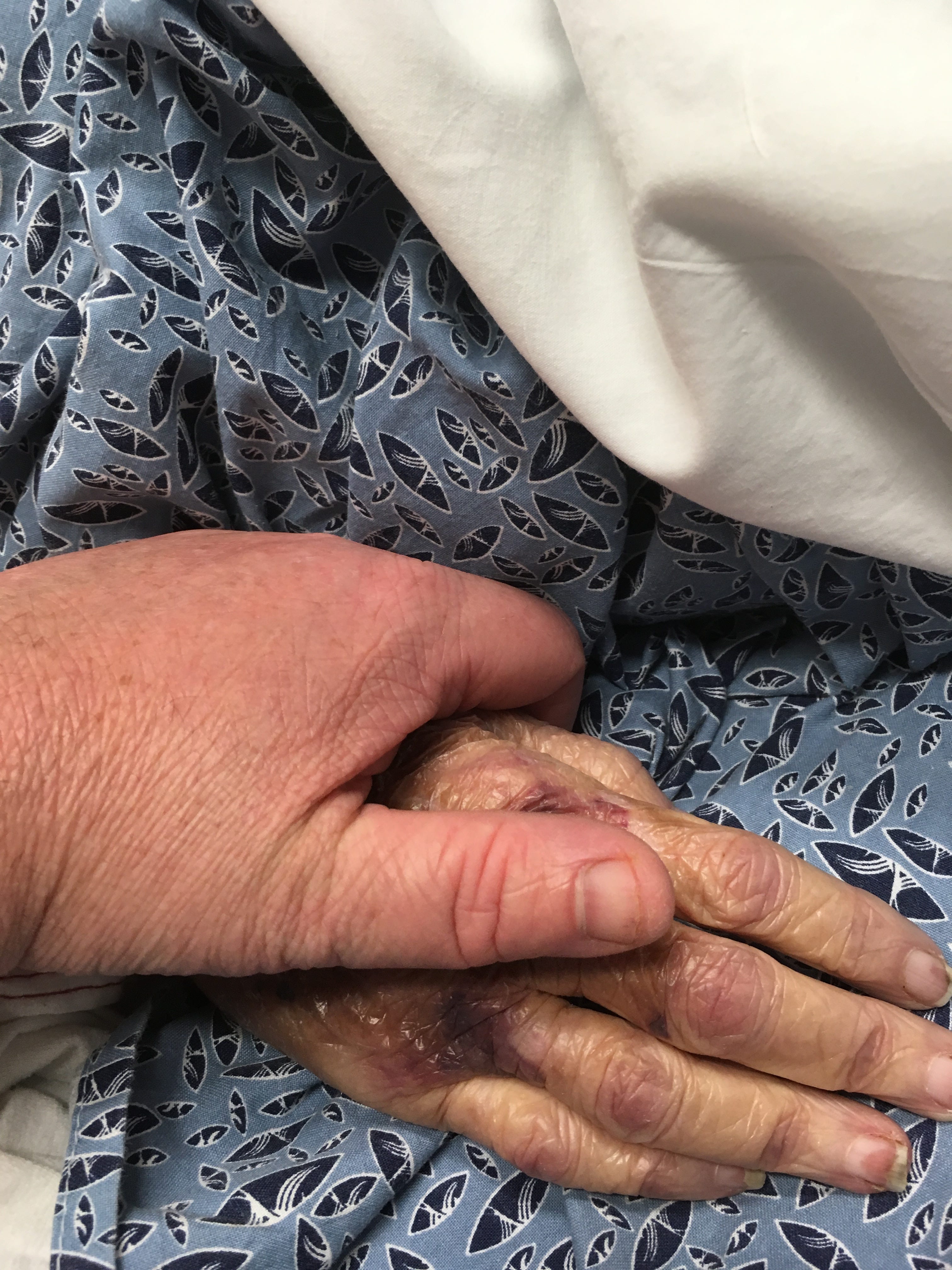
My sentimentality levels rank in the world’s top percentile, so I’m always on edge during the early summer, knowing that a brief grief spiral may be imminent. Anything from a person wearing a homely outfit (my mom’s favorite topic of discussion) to a friend refusing to put mustard on a hot dog (she didn’t trust people who disliked mustard) can trigger some sadness. But in my research, which consists of the one World Cup played since she died, an admittedly small sample size, watching the matches gave me that same extra dose of serotonin. When the camera pans to red-clad South Korea fans jumping and singing, I get flashes of watching the same fans crying as they celebrated a strike by my favorite player (Son Heung-min) while sitting next to my mom, and I smile. Yes, the World Cup reminds me of a sad time, but it was a sad time I got to spend with my mom. And as anybody who has lost somebody knows, you’d gladly take a million sad times over no times at all.
What I’m worried about going into this year’s edition, is that all of the authoritarian threats, corruption, and pricing out of regular fans will rob the tournament of the unity I found so inspiring. When fans are scared to come to our country, where will the joy that makes it such a glorious spectacle come from? The oligarchs and tech millionaires looking at their phones in the first row? Haha. We know that’s not happening. The spirit will be lost, replaced by a sterile emptiness and more Coke commercials. As a sports fan, this infuriates me. On a personal level, I’m afraid it will tarnish all of the sweet memories of spending those final days with my mom that the World Cup currently triggers. And that’s unforgivable.
Thanks Charlie for this amazing piece! I still gasp and tear up by the end even after so many reads.
And thank you Beatrice for always being the first to like these highly likable stories!!!
This is so good, and I can't cover the entirety of why in a comment but I want to say how much I love the familiarity of this; the rituals of doing things like going outside and sitting next to a frog made me laugh and also brought me right back to the 3 weeks I lived in the ICU with my step-father. I love your humor - I laughed out loud a number of times. And I'm with you on feeling demoralized about this World Cup. It should be very different. I'm so sorry about your mom. Thank you for writing this.